The Whittemore Collection
Source: Hidden In Plain Sight
Early Influences and a Turning Point
By the spring of 1889, Harris Whittemore was exposed firsthand to Impressionist painting during a trip to Paris. While there, he visited both the International Exposition and the annual Salon of the French Academy, each of which included works by Impressionist artists. Although the artworks he purchased for family members during this trip remained largely traditional in style, encountering modern Impressionist paintings in such respected and visible settings appears to have marked an important shift in his personal artistic interests.
This trip also played a pivotal role in shaping what would become the Whittemore art collection. At the encouragement of A. A. Pope, the senior members of the Whittemore family entrusted Harris with selecting art objects for the family’s new residence on Church Street, effectively positioning him as the family’s representative in matters of art acquisition.
Developing Taste and Growing Confidence
In the early 1890s, Harris’s exposure to Impressionism continued to expand. In 1891 and 1892, paintings by Claude Monet were regularly exhibited in New York galleries operated by Durand-Ruel and by Boussod, Valadon and Company, alongside more traditional works. The frequent appearance of Monet’s paintings in respected galleries in both New York and Paris reinforced the Whittemore family’s confidence in the artistic and financial value of these works. These exhibitions likely influenced Harris’s evolving taste and informed the selections made for the family home in Naugatuck.
Scope of the Whittemore Collection
Over time, the Whittemore collection grew to an extraordinary scale. It ultimately included more than 1,000 works of art, not counting hundreds of Japanese prints, decorative objects, and other less thoroughly documented items. Among the most significant holdings were more than thirty paintings by Claude Monet, over thirty-five works by Edgar Degas, more than seventy paintings, pastels, and prints by Mary Cassatt, and nearly 600 works in a wide range of media by James Abbott McNeill Whistler.
A Private Collection, Lived With Daily
Unlike many collectors of his era, Harris Whittemore did not seek public recognition for his collection. Art collecting remained a largely private pursuit, and the paintings were displayed throughout the family’s living spaces rather than in a formal gallery setting. Works hung in entrance halls, living rooms, studies, dining rooms, and bedrooms, becoming part of the family’s daily environment rather than objects set apart for display.
A Family Endeavor
Although Harris’s enthusiasm drove the growth of the collection, it was fundamentally a family effort. Early acquisitions from the 1890s were displayed in the Naugatuck home shared by Harris and his father, J. H. Whittemore. Harris selected the works, while his father typically provided the funds, especially for higher-value paintings. As time passed and family members established separate households, detailed records were kept to document ownership and insurance responsibilities for individual works.
In cases where the J. H. Whittemore Company financed the purchase and related expenses of a painting, the company eventually became the legal owner of much of the collection, regardless of where the artworks were physically displayed.
Collecting in an Uncertain Economy
Harris returned to Paris on his honeymoon prepared to continue buying art, even as the economic climate grew increasingly unstable. After decades of growth, the United States economy entered a period of financial panic. Between 1892 and 1894, the gross national product declined by approximately ten percent. In 1893, fewer than half of railroad stocks paid dividends, and the slowdown in rail expansion and construction sharply reduced demand for iron. Despite these conditions, Harris continued to collect with confidence and purpose.
Public Loans and Later Exhibitions
Although the collection was not widely promoted, the Whittemore family did lend works to several significant exhibitions. These included the 1904 Whistler memorial exhibition in Boston and related exhibitions held in London and Paris in 1905, the Cassatt-Degas exhibition in New York in 1915, and the inaugural exhibition of the Cleveland Museum of Art in 1916.
Following Harris Whittemore’s death, selected works from the collection were occasionally exhibited to support charitable causes. In 1938, a small group of paintings was displayed at the Tuttle House in Naugatuck to benefit the Children’s Center in New Haven. Additional works were exhibited at the Mattatuck Museum in Waterbury in 1941 to raise funds for the local Red Cross. In 1945, several paintings were included in an exhibition at the Wildenstein Galleries in New York, with proceeds benefiting the children of Giverny.
-
![]()
Naugatuck Daily News - Thu, Mar 31, 1960
-
![]()
Naugatuck Daily News - Thu, Mar 17, 1960
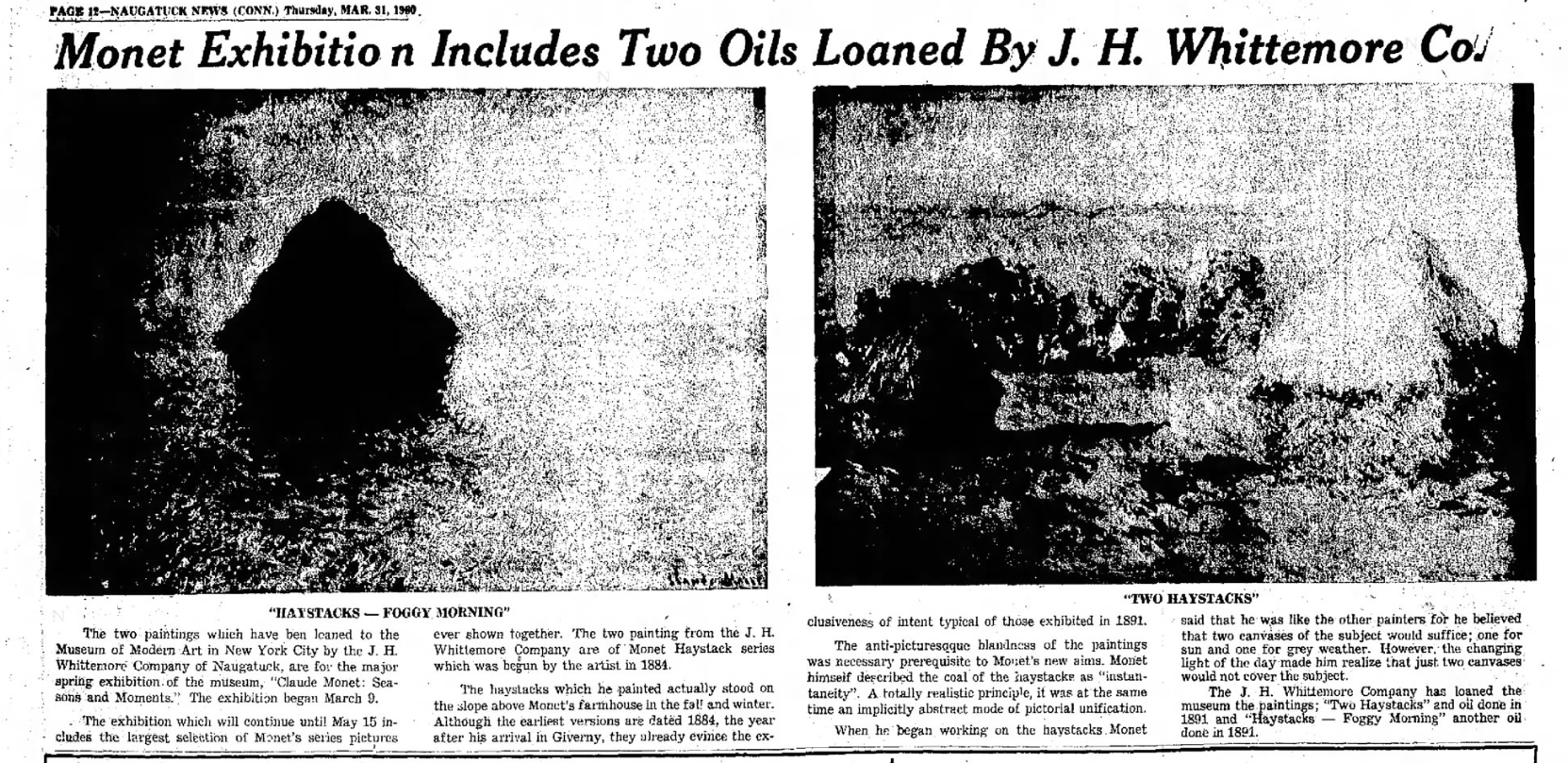
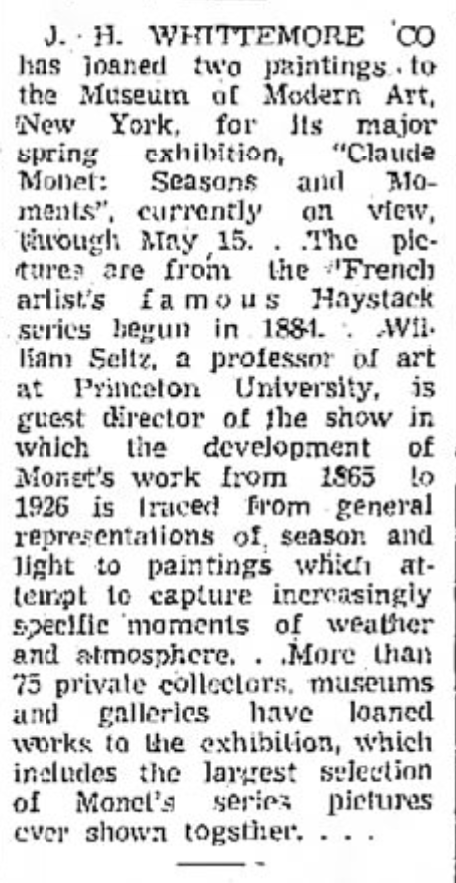
Source: Hidden In Plain Sight
Origins of a Collector
The development of Harris Whittemore’s art collection was shaped above all by his close relationship with A. A. Pope. Pope was not simply an influence but a true collaborator, sharing Whittemore’s enthusiasm, taste, and curiosity. The two men began collecting at roughly the same time and gravitated toward many of the same artists, including Claude Monet, Mary Cassatt, James Abbott McNeill Whistler, Edgar Degas, and the lesser-known Eugène Carrière.
Their relationship was marked by frequent exchanges of ideas and recommendations. After Pope met Whistler in Paris in 1894, he wrote enthusiastically to Harris about the experience, sharing his excitement as one collector speaking to another. Harris sometimes acted as Pope’s agent in acquiring works, while Pope encouraged and affirmed Harris’s own purchases. This reciprocal enthusiasm occasionally brought moments of uncertainty. In 1894, Pope purchased his first Cassatt at Harris’s urging but sold it only three months later, feeling it did not measure up to the Cassatt Harris had acquired. Harris worried that he had pressed his friend too strongly, but Pope reassured him, explaining that while he appreciated the work, his expectations had been shaped by the exceptional Cassatt Harris had purchased in Paris.
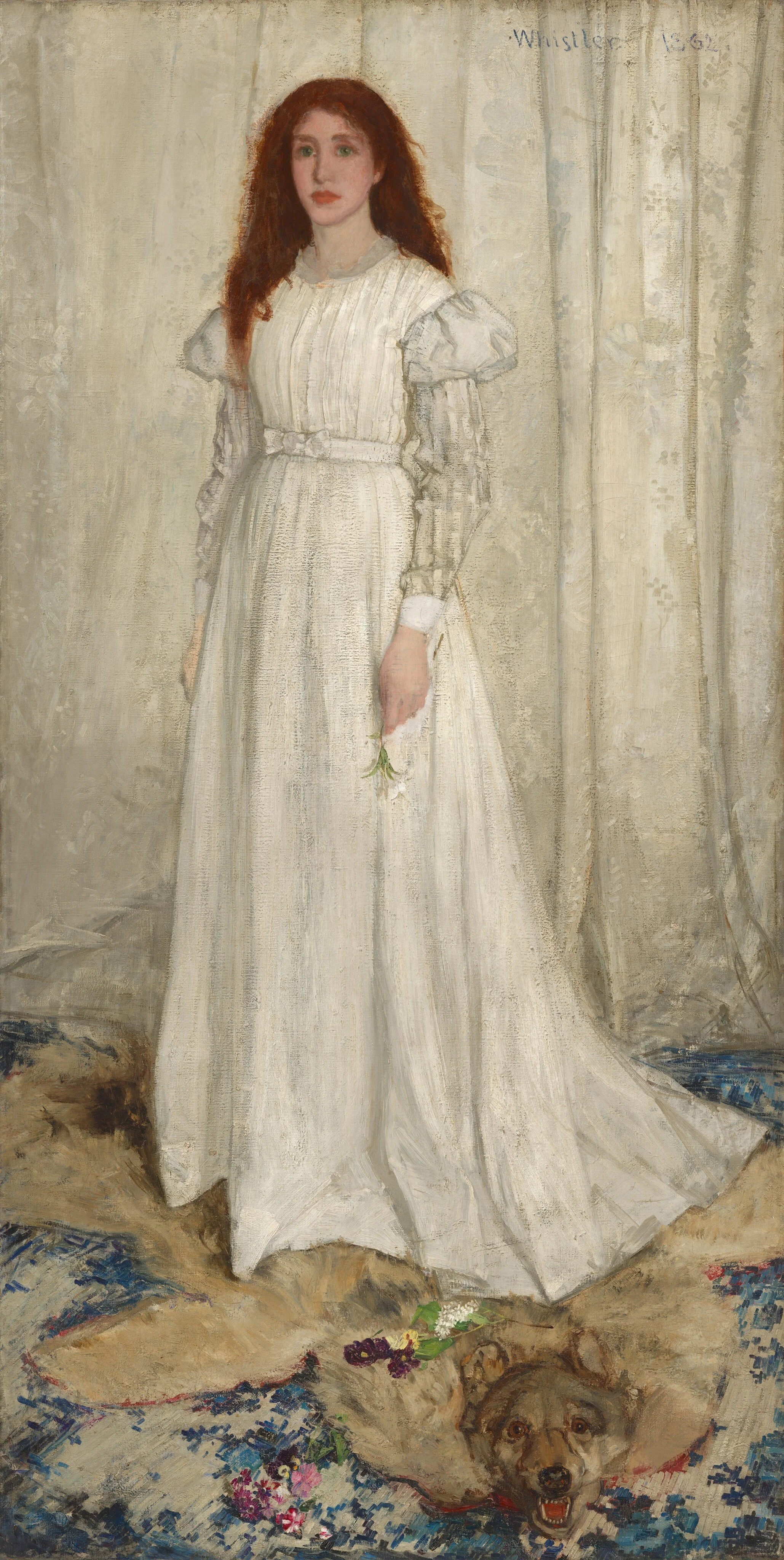
Despite such moments, their mutual encouragement continued unabated. When Pope informed Harris that one version of Whistler’s The White Girl was considered the finest painting in a London exhibition in 1894, Harris absorbed that judgment. Two years later, he purchased what would become Whistler’s ultimate interpretation of the subject.
Friendship, Gratitude, and Exchange
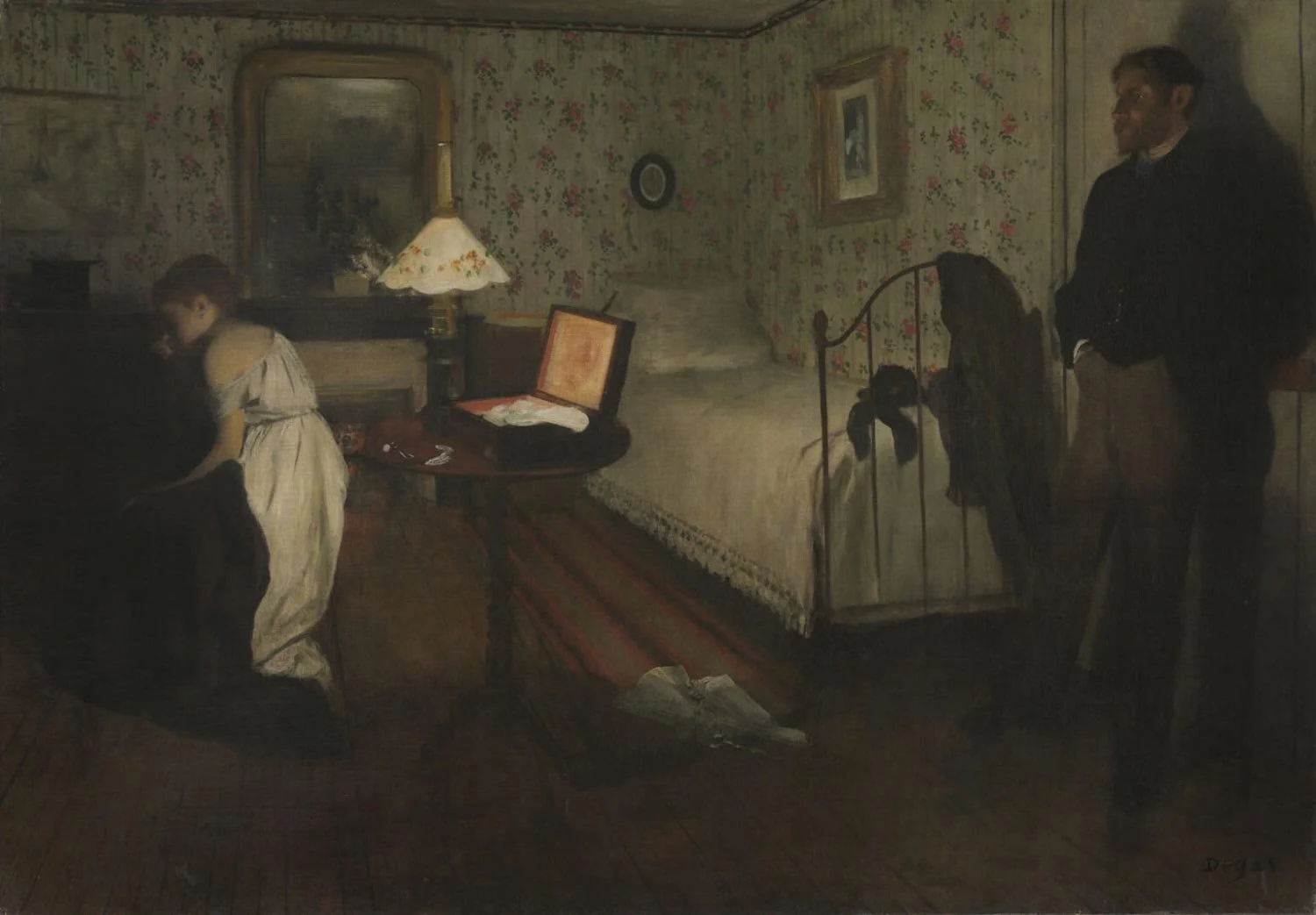
The depth of the relationship between Pope and Whittemore was evident not only in their collecting but also in their personal exchanges. At Christmas in 1909, the two friends and business associates exchanged extraordinary gifts. According to art historian Erica Hirshler, Pope had long admired a Degas painting but had been dissuaded from purchasing it after his wife objected to its intimate subject matter. Several months later, Harris acquired the painting himself and presented it to Pope as a Christmas gift.
The Degas was accompanied by a deeply personal note from Harris, expressing gratitude for Pope’s guidance and support since Harris’s earliest days working in the Cleveland office more than twenty-five years earlier. Pope, deeply moved, responded with a painting by Renoir titled Girl With a Cat, formerly part of the Potter Palmer collection, along with a heartfelt letter expressing his affection and esteem for Harris.
Their bond extended well beyond art. They were connected through business, family ties, charitable interests, and a shared aesthetic vision. Although Pope was twenty-two years older than Harris, their relationship was fraternal rather than paternal. While the two collections developed in parallel, the Whittemore collection ultimately surpassed Pope’s in scale. Early twentieth-century insurance records indicate that the Whittemores’ paintings were valued at approximately fifty percent more than Pope’s. Even then, Harris continued to collect.
Breaking from Tradition
Harris’s collecting choices were not what his father initially expected. The new Whittemore home in Naugatuck had been decorated with conventional Barbizon-style landscapes, watercolors by the Waterbury artist Antoinette Alcott Bassett, and a genre painting by Herr Flügen. A Corot would have aligned comfortably with those tastes. Instead, Harris was drawn to newer, more experimental work, particularly Monet’s bold, brightly colored paintings with their rough surfaces and modern sensibility.
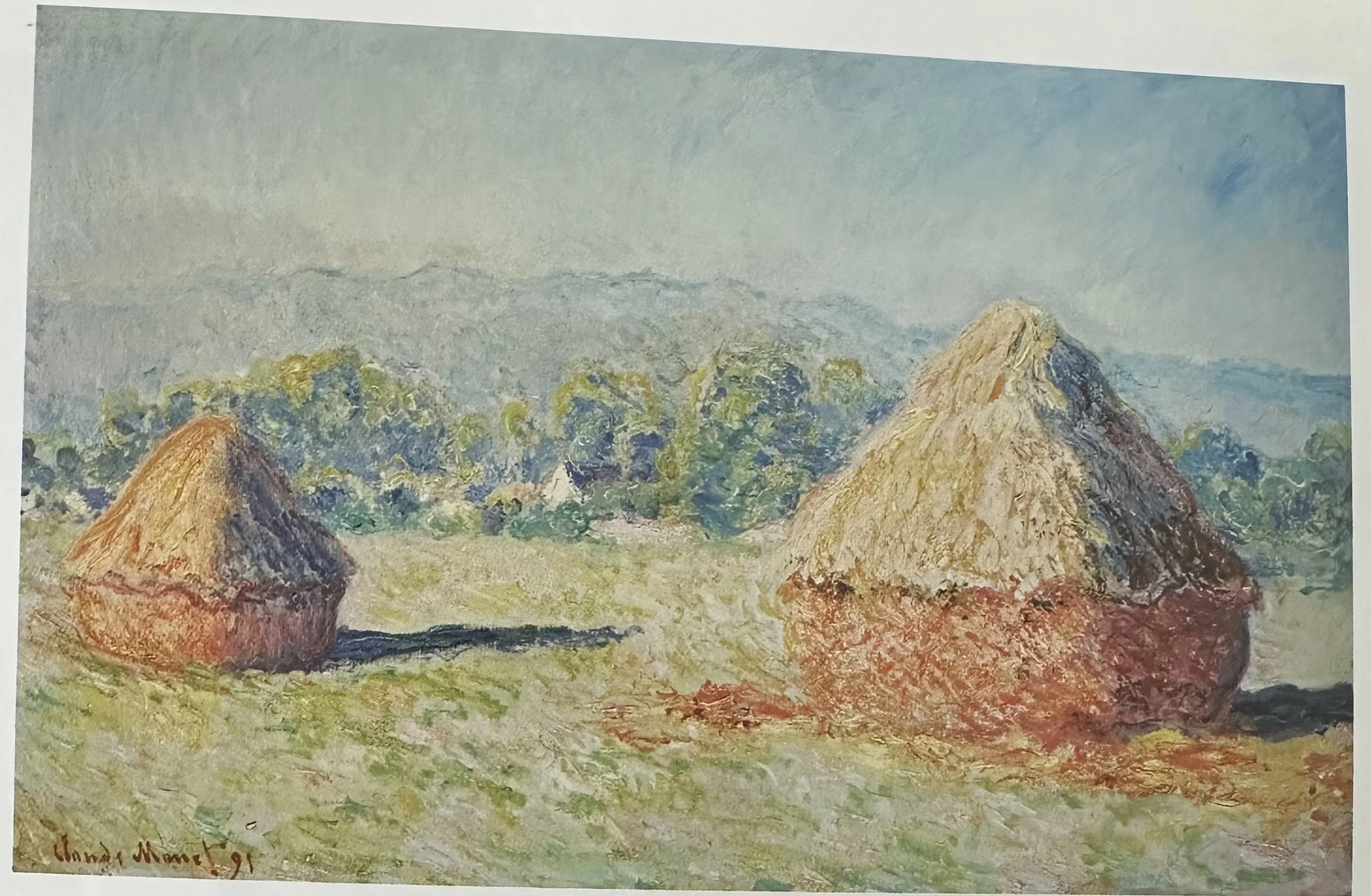
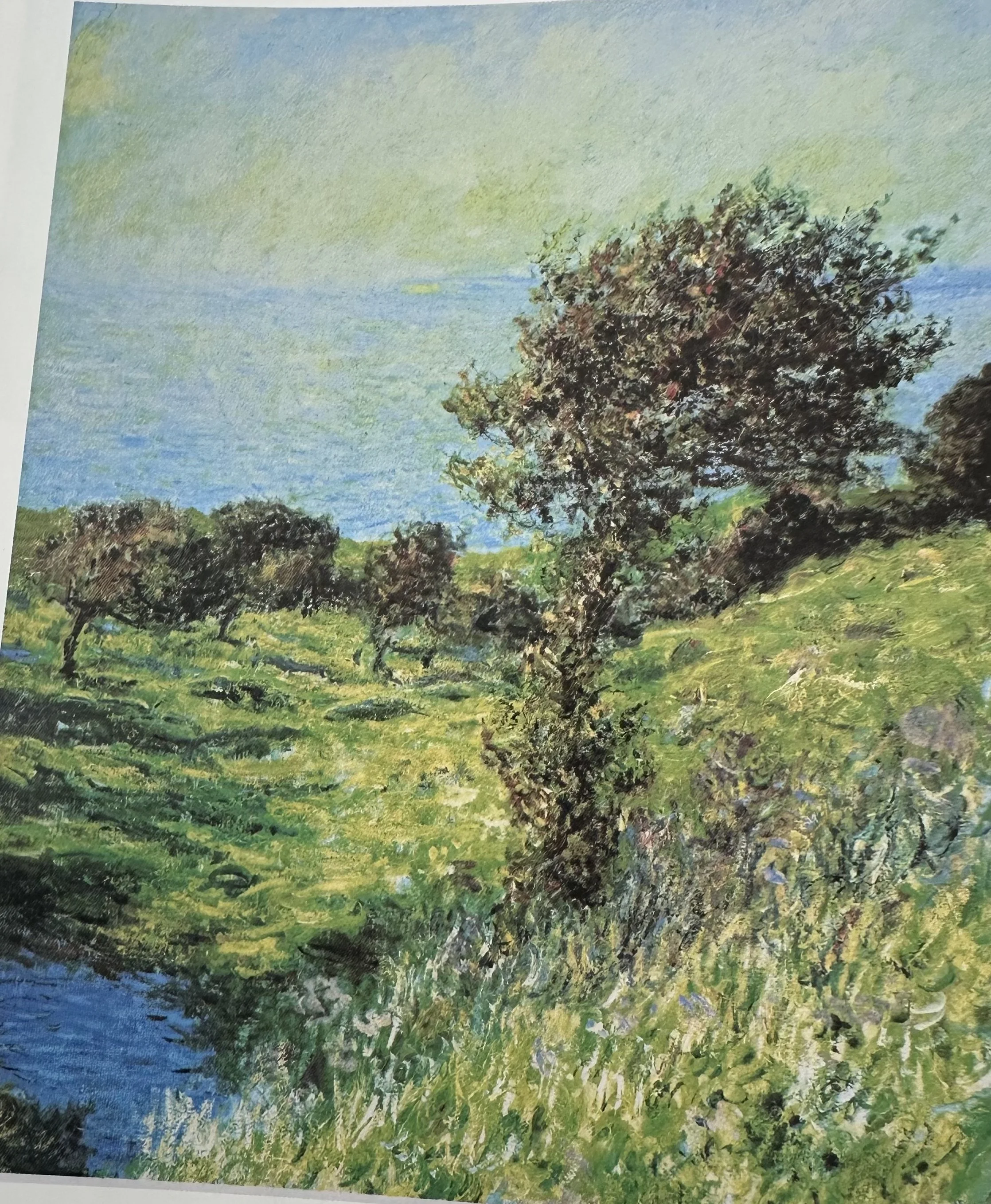
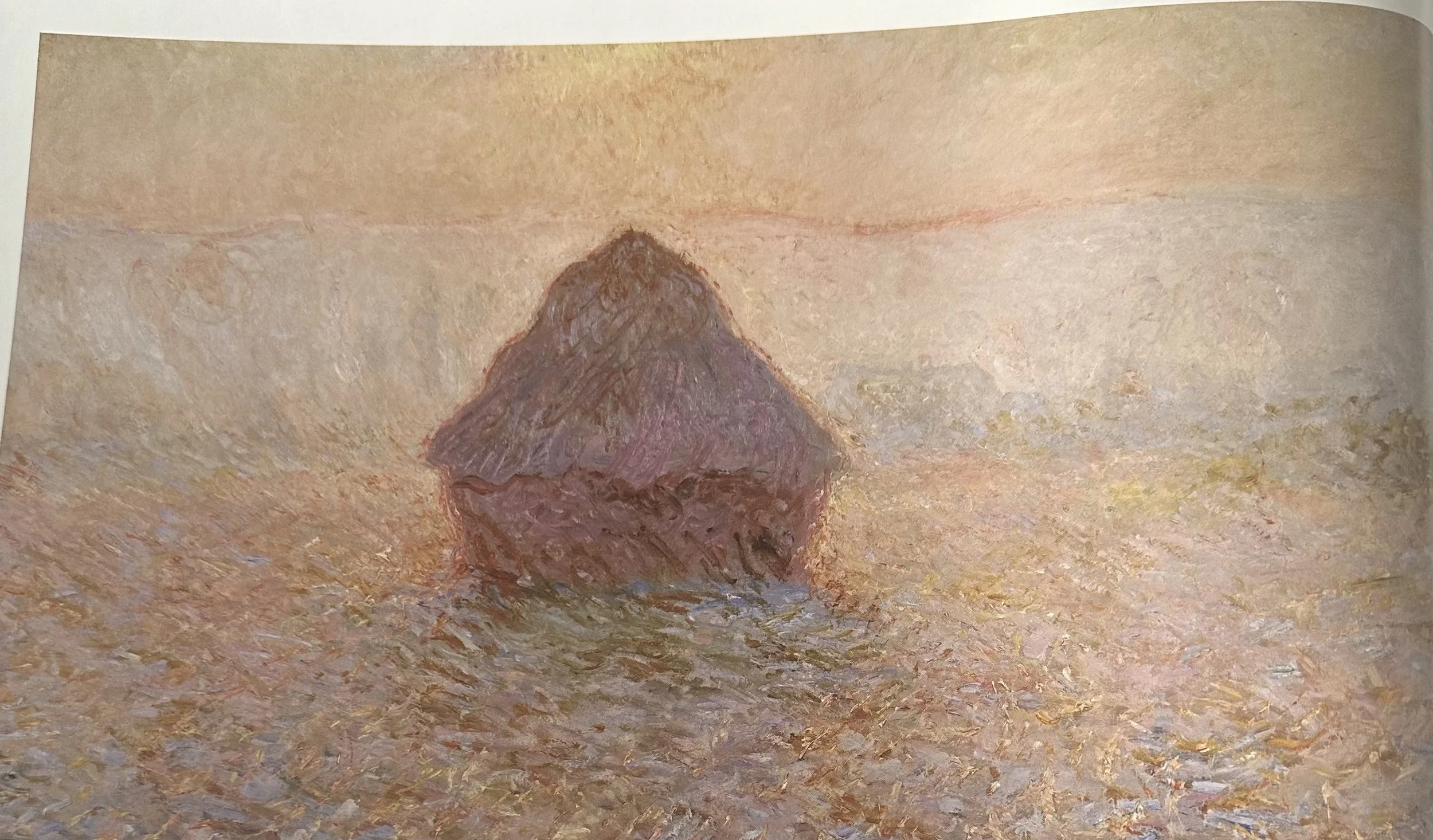
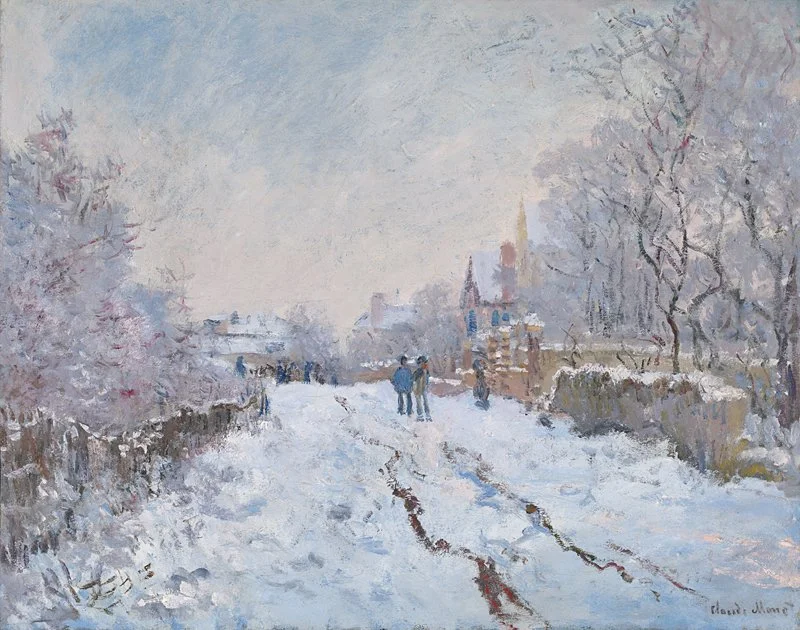
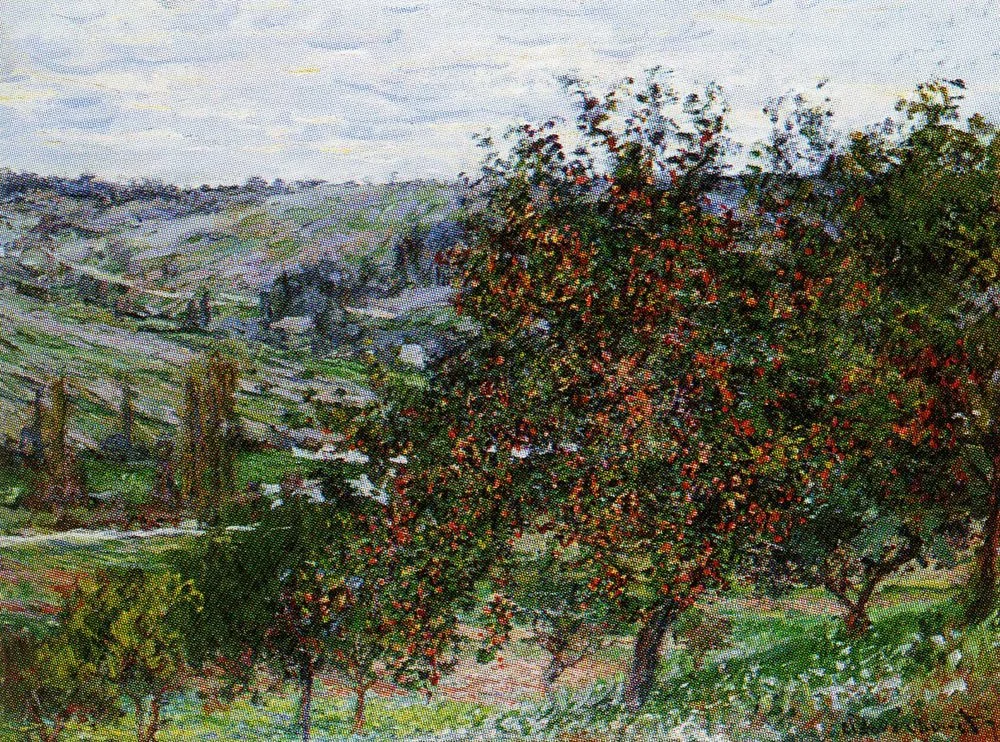
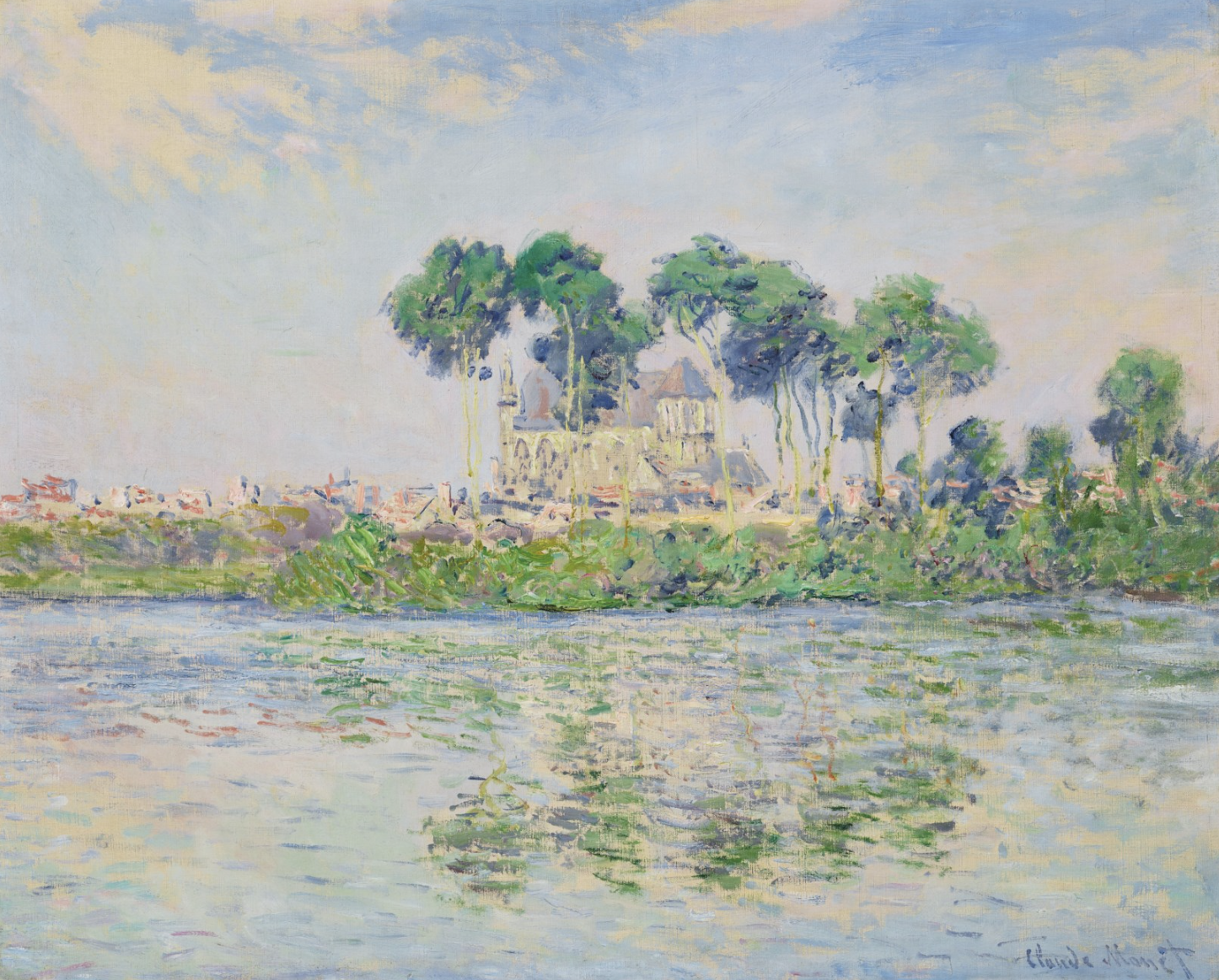
It is likely that A. A. Pope’s endorsement of Monet’s work helped J. H. Whittemore place greater trust in his son’s judgment. Harris’s earliest Impressionist purchases were exclusively by Monet. After acquiring seven works, his collection included a snow scene, The Church at Vernon from 1880, Gust of Wind from 1881, Apple Trees Near Vétheuil from 1878, and three recently completed haystack paintings from 1891. From Monet’s dramatic Creuse series, Harris purchased Creuse, Dark Weather from 1891 and Creuse, Sunset from 1889. These works were acquired through the New York galleries of Durand-Ruel and Boussod, Valadon and Company. When Pope first saw Creuse, Dark Weather hanging in the Whittemore home, he was so taken by it that he offered to purchase it.
Christmas Gift Exchange with A.A. Pope
-
![]()
For Christmas in 1909, Harris Whittemore gifted A. A. Pope this painting. Titled: Interior - Edgar Degas. Note: Pope had been interested in purchasing this painting - his wife objected to it's depiction of a half-dressed woman and man in evening attire on either side of an unmade bed.
-
![]()
Given to Harris Whittemore from A.A. Pope in response to his Degas gift.
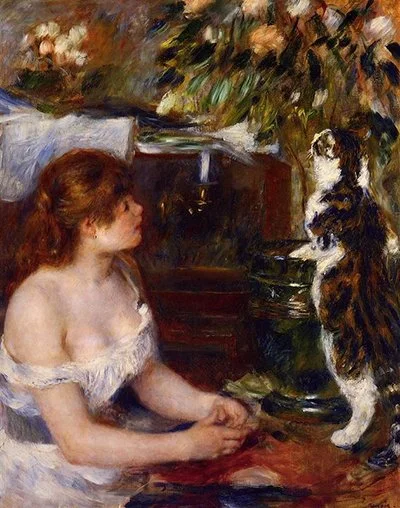
Source: Hidden In Plain Sight
Claude Monet and the Collector’s Eye
The work of Claude Monet defined the Whittemore collection more than that of any other artist. The first significant painting Harris purchased, in 1890, was a Monet, and one of the last paintings he acquired before his death in 1926 was also by Monet. Over more than three decades, Harris purchased at least thirty of the artist’s works.
By the time Harris began collecting, Monet was already firmly established and living in Giverny, where his home, studio, and gardens formed the basis of his artistic practice. His paintings commanded high prices and were sought after by a growing circle of modern collectors. Harris was initially drawn to Monet’s rural scenes, which combined bold abstraction with familiar countryside subjects. As his understanding deepened, he sought out increasingly daring compositions, including the haystack paintings and the dramatic landscapes of the Creuse valley. The stark cliffs and deep valleys of those works may have resonated with Harris’s familiarity with the terrain of the Naugatuck Valley. Over time, he also acquired coastal scenes depicting Belle Isle and Port-Dormois. Most of these purchases were made through the Paris galleries of his New York dealers, Durand-Ruel and Boussod, Valadon and Company.
Claude Monet
-
![]()
Haystacks in the Sun, Morning Effect c. 1891
Acquired by Harris Whittemore, 1891. Hung in Harris Whittemore’s house.
-
![]()
Gust of Wind c. 1881
Acquired by Harris Whittemore, 1891. Hung in Harris Whittemore house.
-
![]()
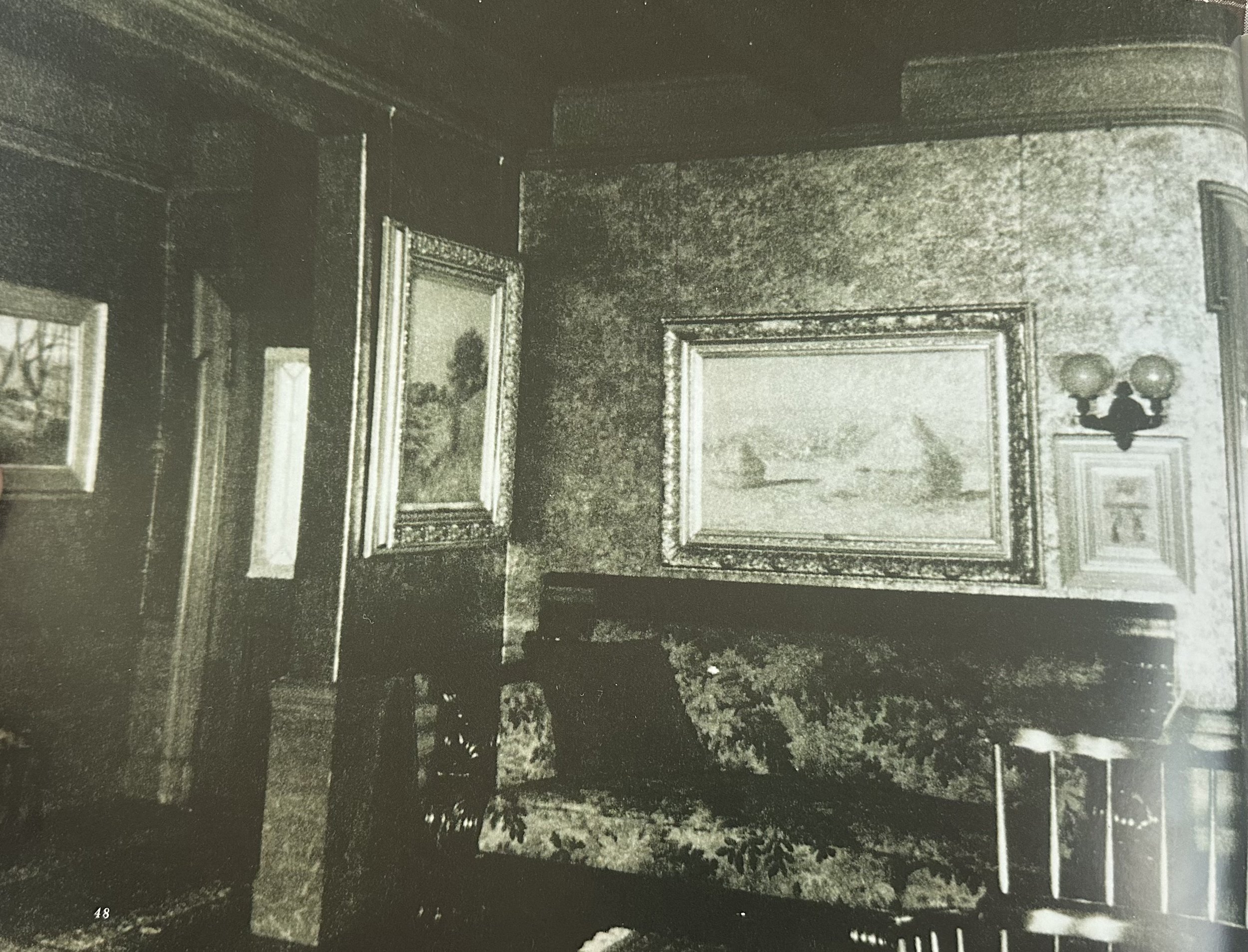
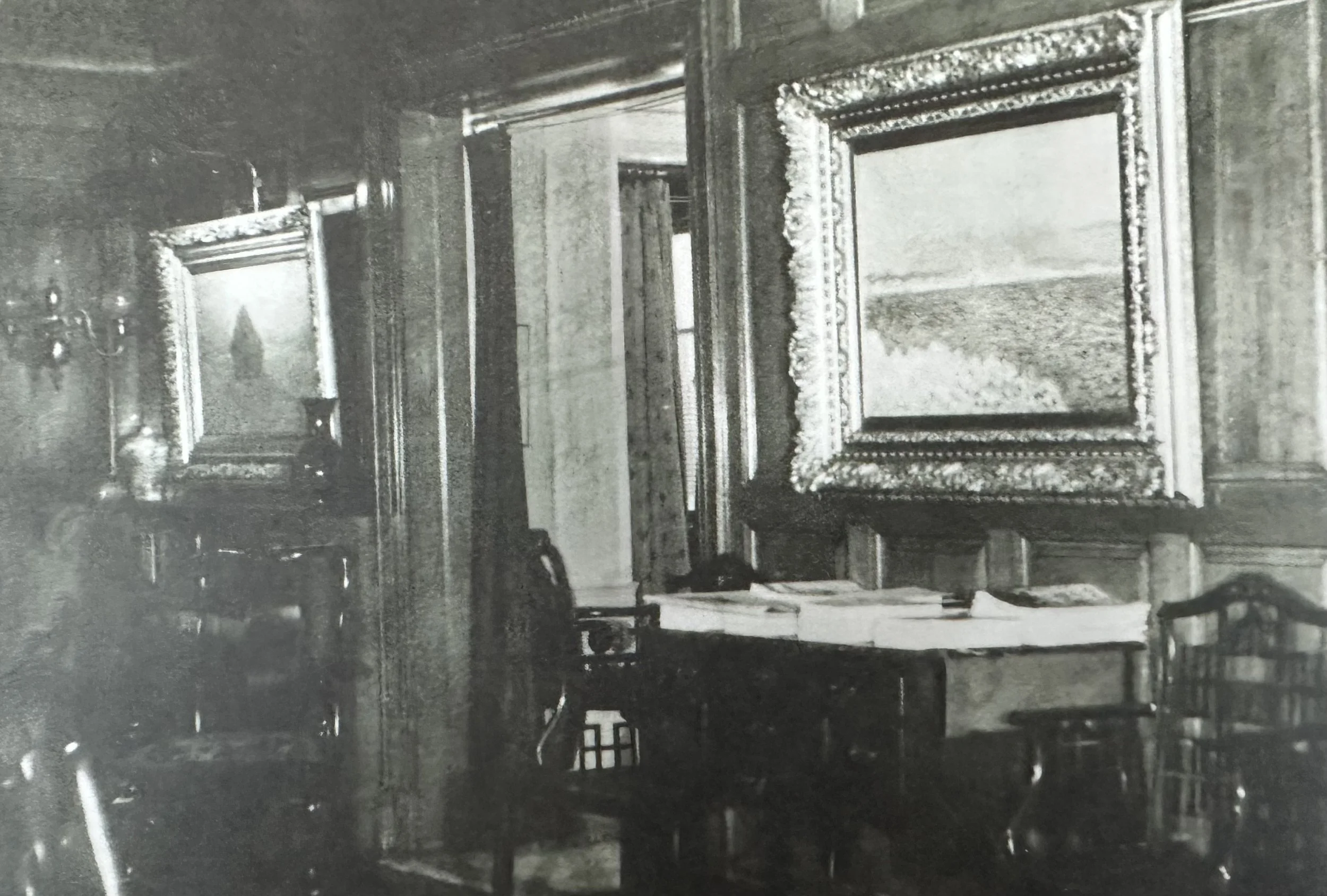
Harris Whittemore Home
Photo taken in 1941 of the entrance hallway in Harris Whittemore’s Naugatuck home, showing Monet’s Gust of Wind and Haystacks in the Sun, Morning Effect.
-
![]()
Grainstack, Sun in the Mist c. 1891
Aquired by Harris Whittemore, 1891. Hung in J. H. Whittemore’s house.
-
![]()
J. H. Whittemore Home
Grainstack, Sun in the Mist, c. 1891, hanging in J.H. Whittemore's home.
-
![]()
Snow Scene at Argenteuil c. 1875
Bought from the artist by Théodore Duret (1838–1927), December 1879; with Boussod, Valadon et Cie, Paris, 1892; acquired by Harris Whittemore (1864–1927), Naugatuck, CT, 1893; private collection, USA; Acquavella Galleries, New York, early 1970s; with Simon Sainsbury (1930–2006), London. Bequeathed by Simon Sainsbury to the National Gallery, 2006.
-
![]()
Apple Trees near Vetheuil c. 1878
Acquired by Harris Whittemore, 1892. Hung in J.H. Whittemore’s house.
-
![]()
The Church at Vernon c. 1880
Acquired by Harris Whittemore, 1893. It belonged to Harris but hung in J. H. Whittemore house.
Source: Hidden In Plain Sight
Mary Cassatt and a Lasting Friendship
Harris Whittemore developed a deep admiration for Mary Cassatt early in his collecting career. On April 10, he purchased one of her paintings depicting a mother and child from her dealer, Durand-Ruel. Writing to his Aunt Ellen, he described Cassatt as an American artist of exceptional ability, whom he regarded as the most accomplished American painter of her time.
Cassatt was the only artist in Harris’s collection whom he knew personally. Living in Paris, she was respected among the Impressionists and widely recognized in the United States, having recently completed the mural The Modern Woman for the Columbian Exposition in Chicago. Between 1893 and 1926, Harris purchased seventy-one works by Cassatt, including oils, pastels, drawings, and a substantial number of prints, a medium in which she excelled.
Although some have suggested that Cassatt guided Whittemore’s collecting, his interest in Impressionism was well established before they met. Her influence was limited to practical advice, such as recommending that he visit the dealer Alphonse Portier, whom she believed might offer more favorable prices on Degas drawings. Their relationship, however, developed into a lasting friendship. Harris supported Cassatt through personal, financial, and professional difficulties, continued to purchase her work throughout his life, and loaned her paintings to exhibitions when she requested. In 1915, he traveled through a snowstorm to deliver her works to a New York exhibition organized to raise funds for women’s suffrage.
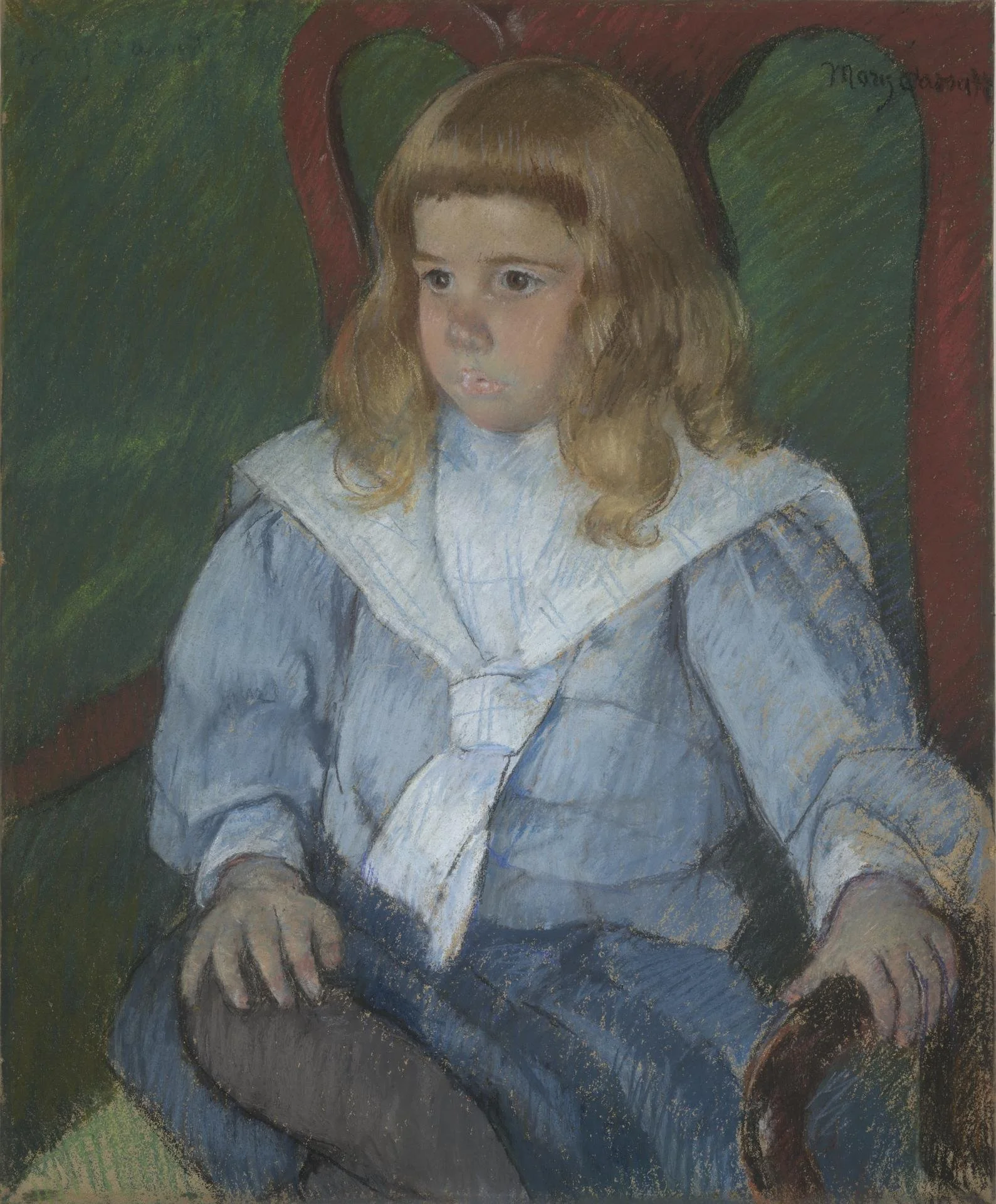
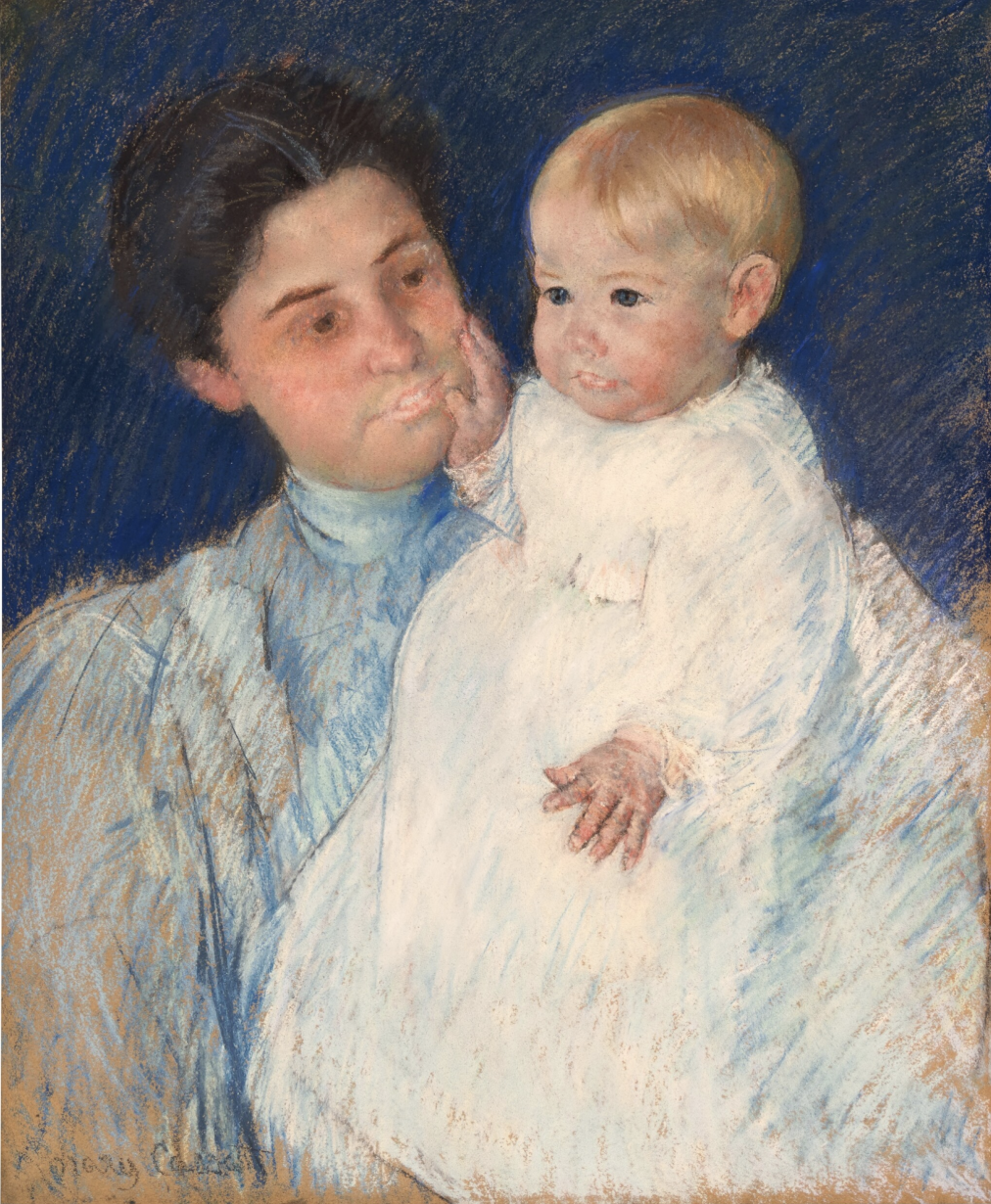
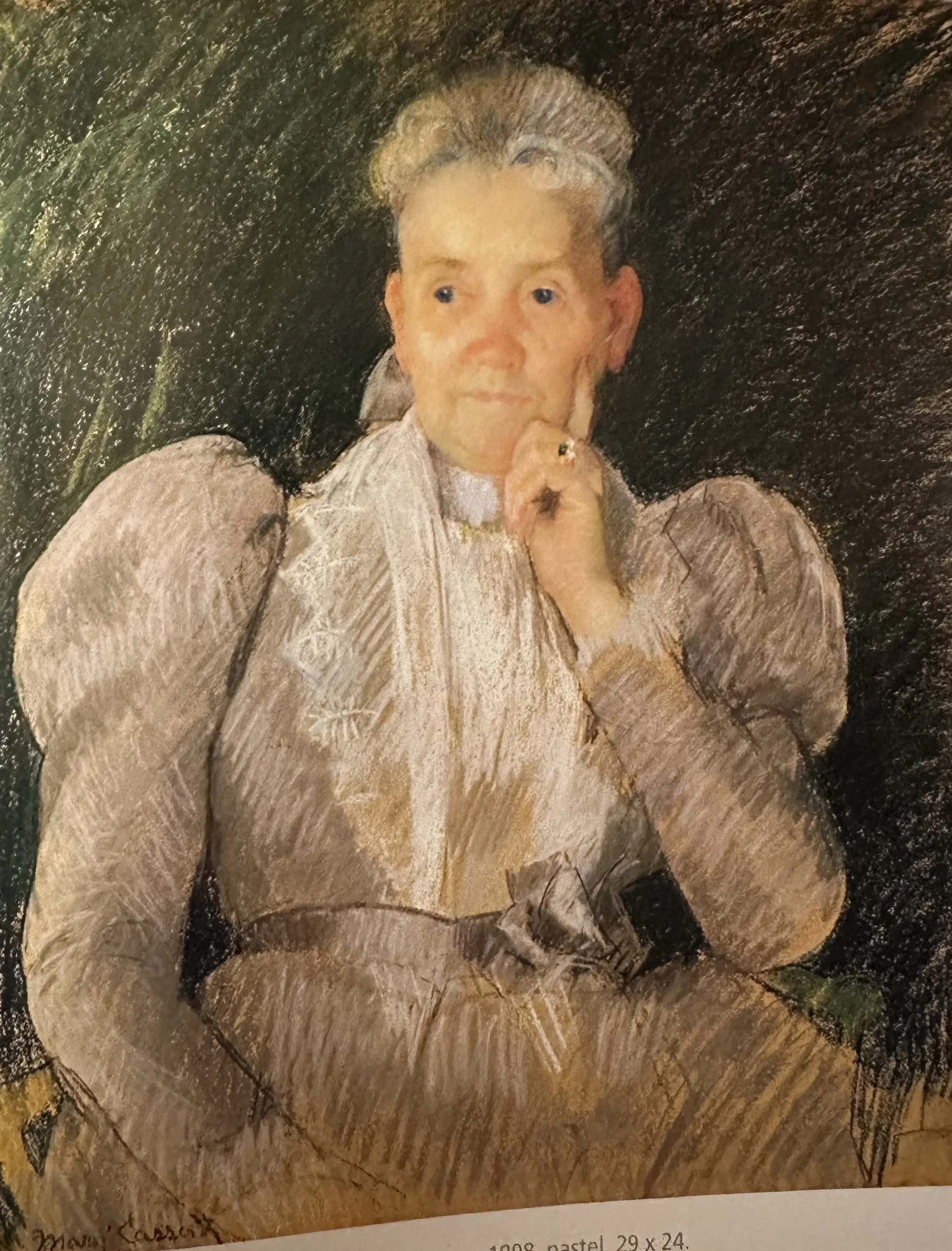
In 1898, Mary Cassatt visited the Whittemores at their homes in Naugatuck and Middlebury and completed three large pastel portraits of family members.
Mary Cassatt
-
![]()
Portrait of Harris Whittemore Jr. (Boy with Golden Curls)
One of the three portraits Mary Cassatt completed at the Whittemores Naugatuck and Middlebury homes in 1898. On View at Yale University Art Gallery.
-
![]()
Portrait of Mrs. Harris Whittemore and Baby Helen
One of the three portraits Mary Cassatt completed at the Whittemores Naugatuck and Middlebury homes in 1898.
-
![]()
Portrait of Mrs. J. H. Whittemore
One of the three portraits Mary Cassatt completed at the Whittemores Naugatuck and Middlebury homes in 1898.
-
![]()
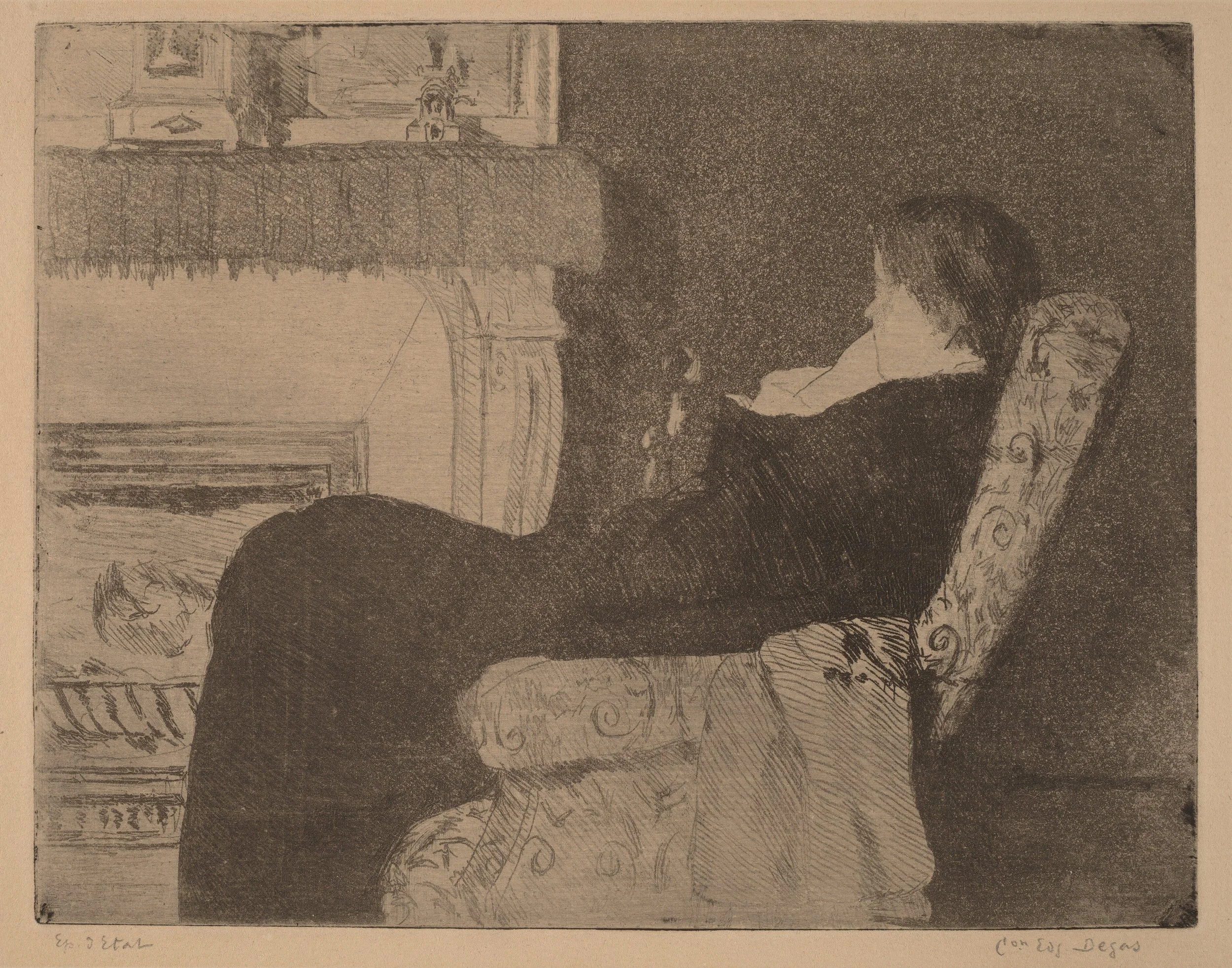
Mary Cassatt - Before the Fireplace (No. 1) c. 1882
Harris Whittemore [1864-1927], Naugatuck, CT, 1919; (his sale, Parke-Bernet Galleries, New York, 17 January 1949, no. 26); (Charles Sessler, Philadelphia, PA); purchased by Lessing J. Rosenwald, Jenkintown, PA, 1949; gift to the National Gallery of Art, 1949.
-
![]()
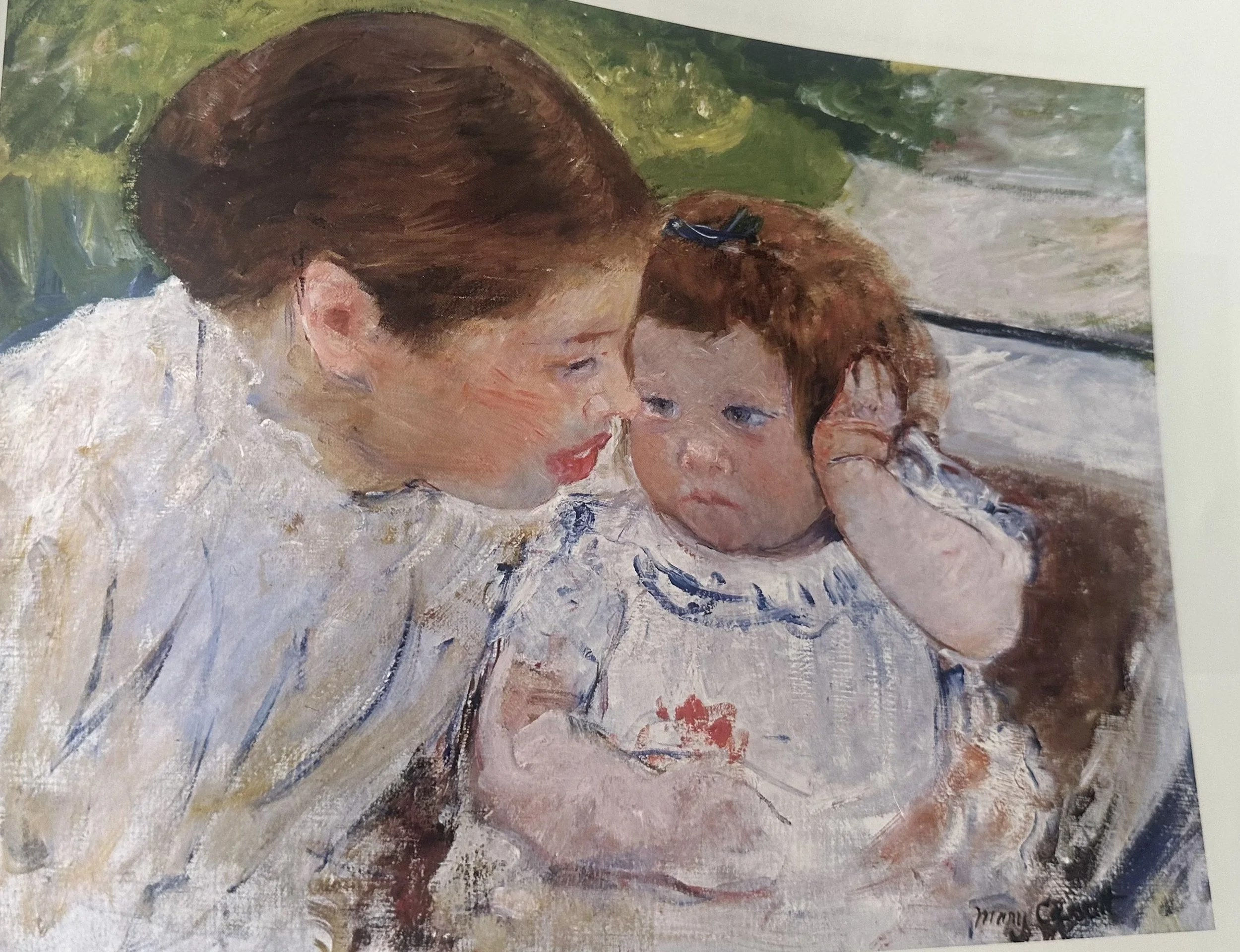
Susan Comforting the Baby c. 1881
Acquired by Harris Whittemore in 1893. Hung in Harris Whittemore’s house. Part of the collection at the Columbus Museum of Art, OH.
Source: Hidden In Plain Sight
Edgar Degas and the Human Cost of Beauty
Degas was another central figure in Whittemore’s collection. Over thirty years, Harris acquired thirty-five works by the artist, including oils, pastels, and drawings. He began collecting Degas early, in 1893, and continued until the final year of his life.
While Degas’s subjects once shocked polite society in Paris, they did not deter Harris. He was particularly drawn to images of dancers, especially scenes showing rehearsals and moments of rest between performances. These works revealed both the discipline required to create beauty and the exhaustion endured by young women with limited opportunities. Harris, who was active in social-service work in Naugatuck, would have recognized the darker implications present in these scenes, even as he appreciated their color, composition, and sense of movement.
Edgar Degas
-
![]()
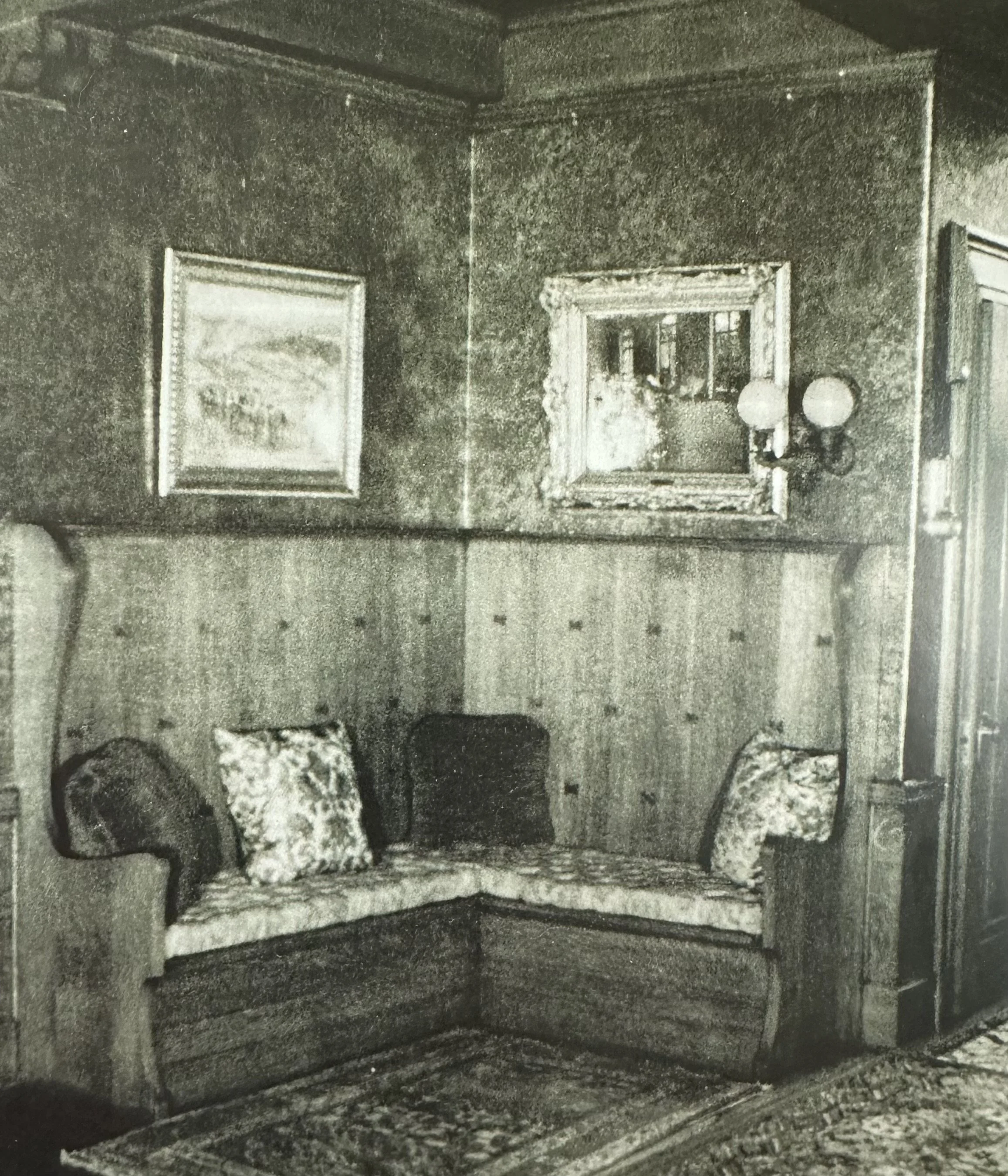
At the Start c. 1913 & The Rehearsal c. 1907
Photo taken in 1941 in the entrance hallway in Harris Whittemore’s Naugatuck home.
-
![]()
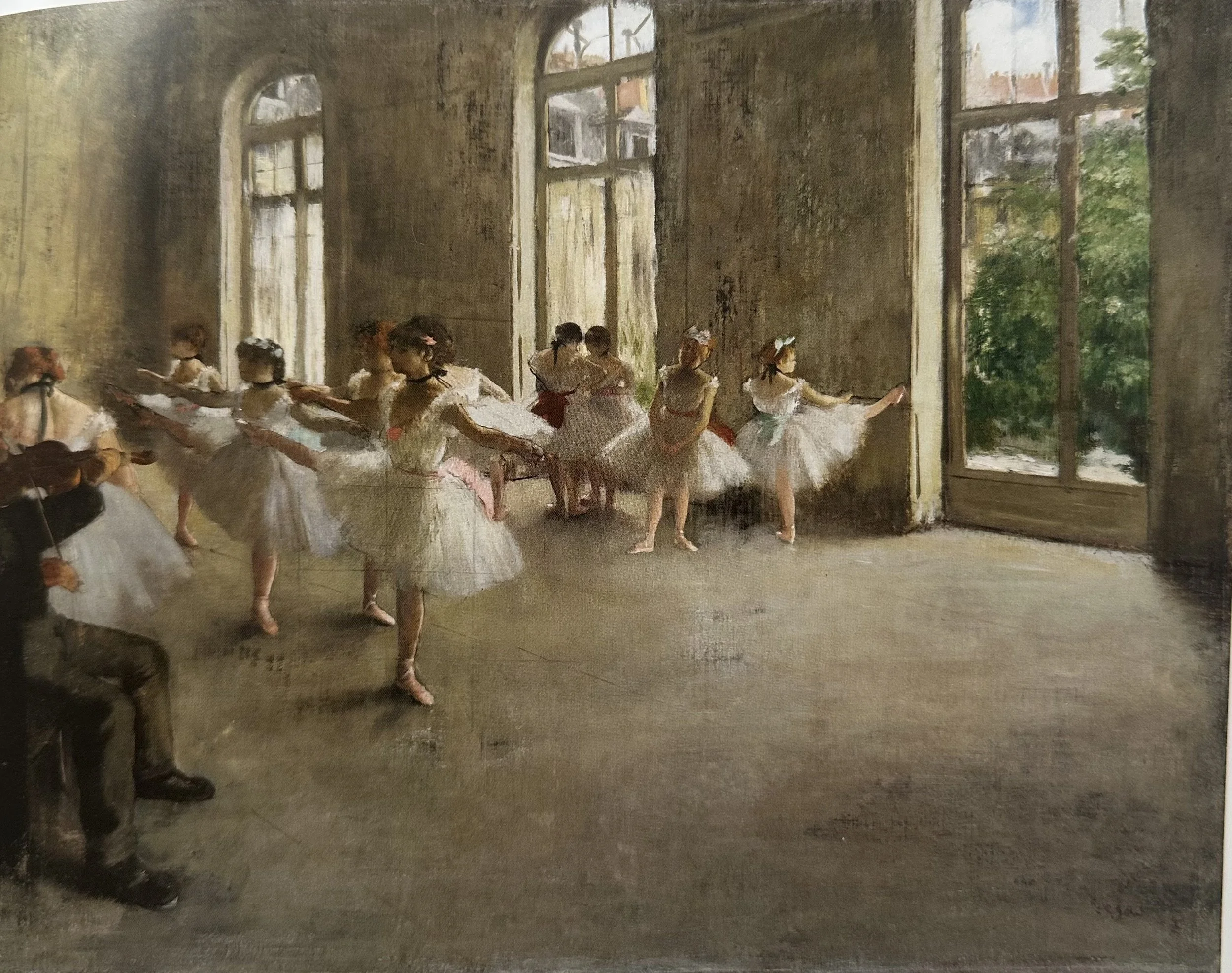
The Rehearsal 1873-78
Acquired by Harris Whittemore, 1907. Hung in the Harris Whittemore Home.
-
![]()
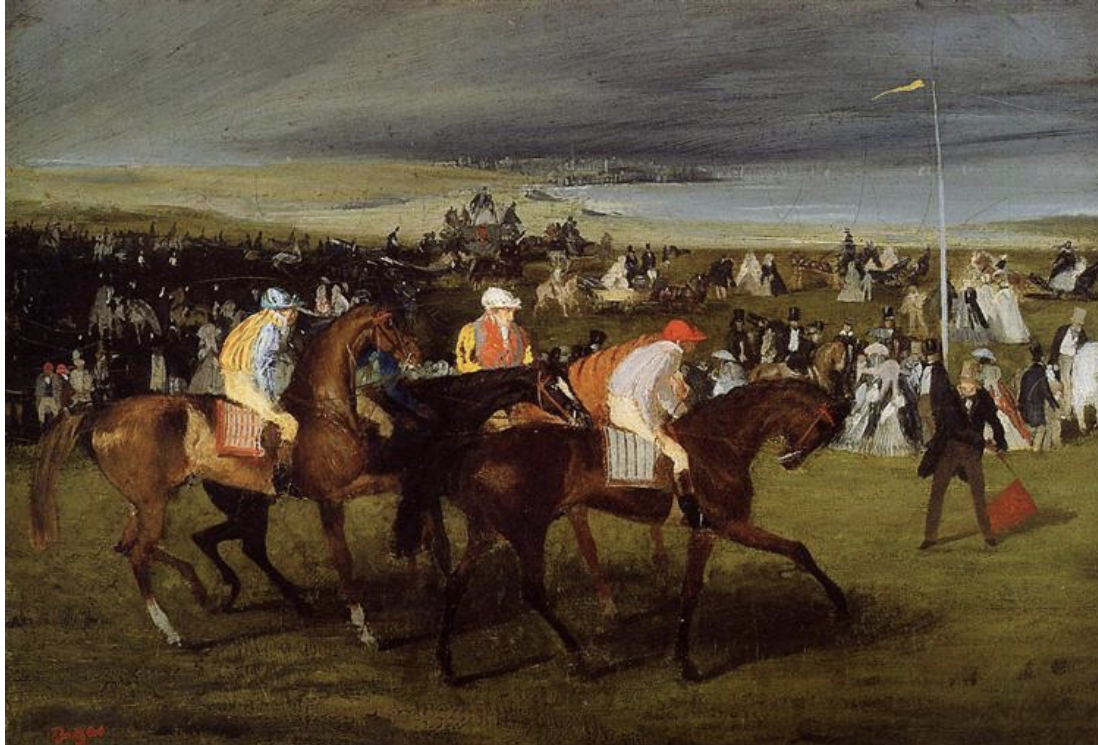
At the Start c. 1884-86
Acquired by Harris Whittemore in 1913 and hung in home.
-
![]()
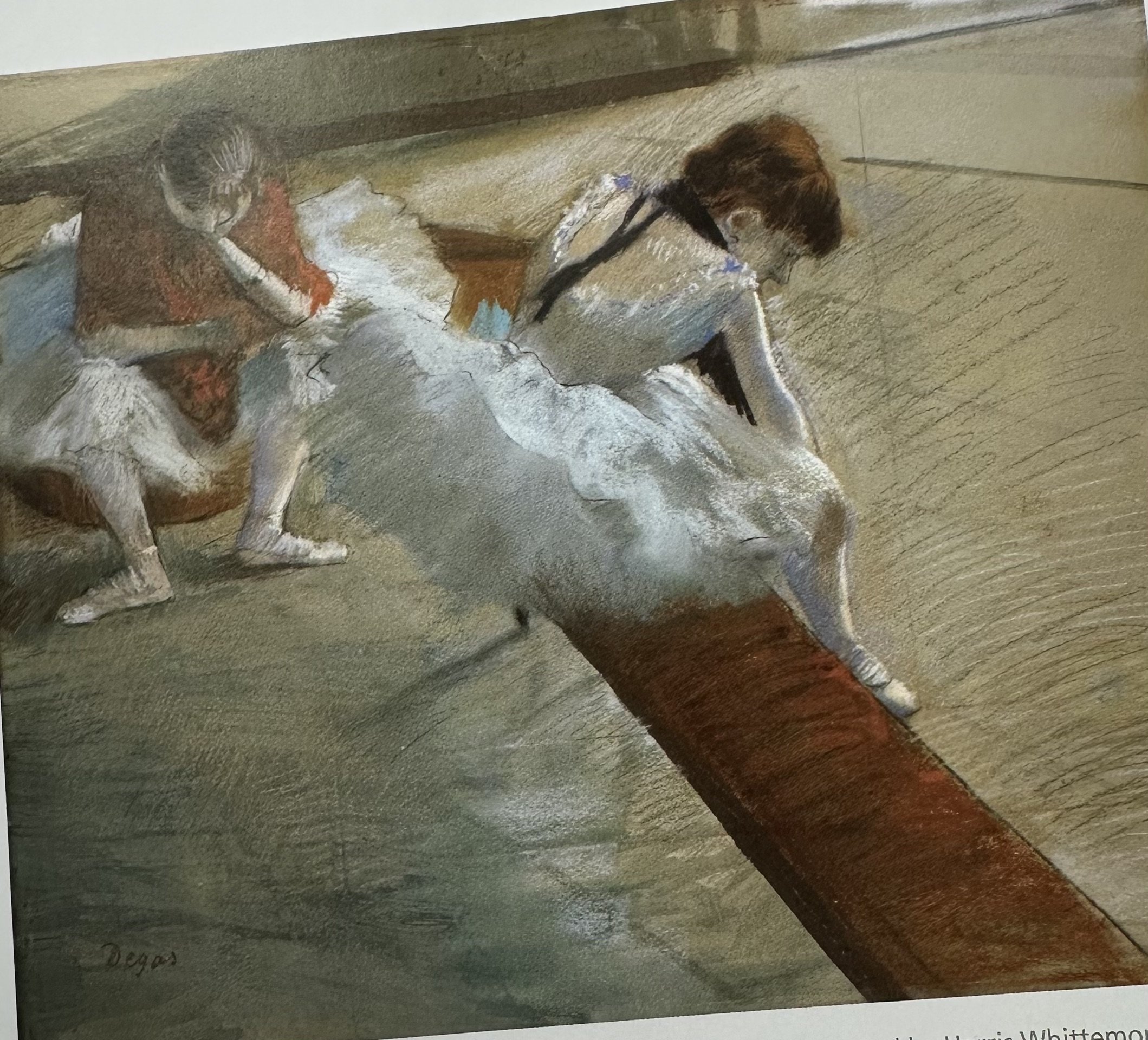
Dancers Resting c. 1881-5
Acquired by Harris Whittemore in 1900 and traded back to Durand-Ruel in 1913.
-
![]()
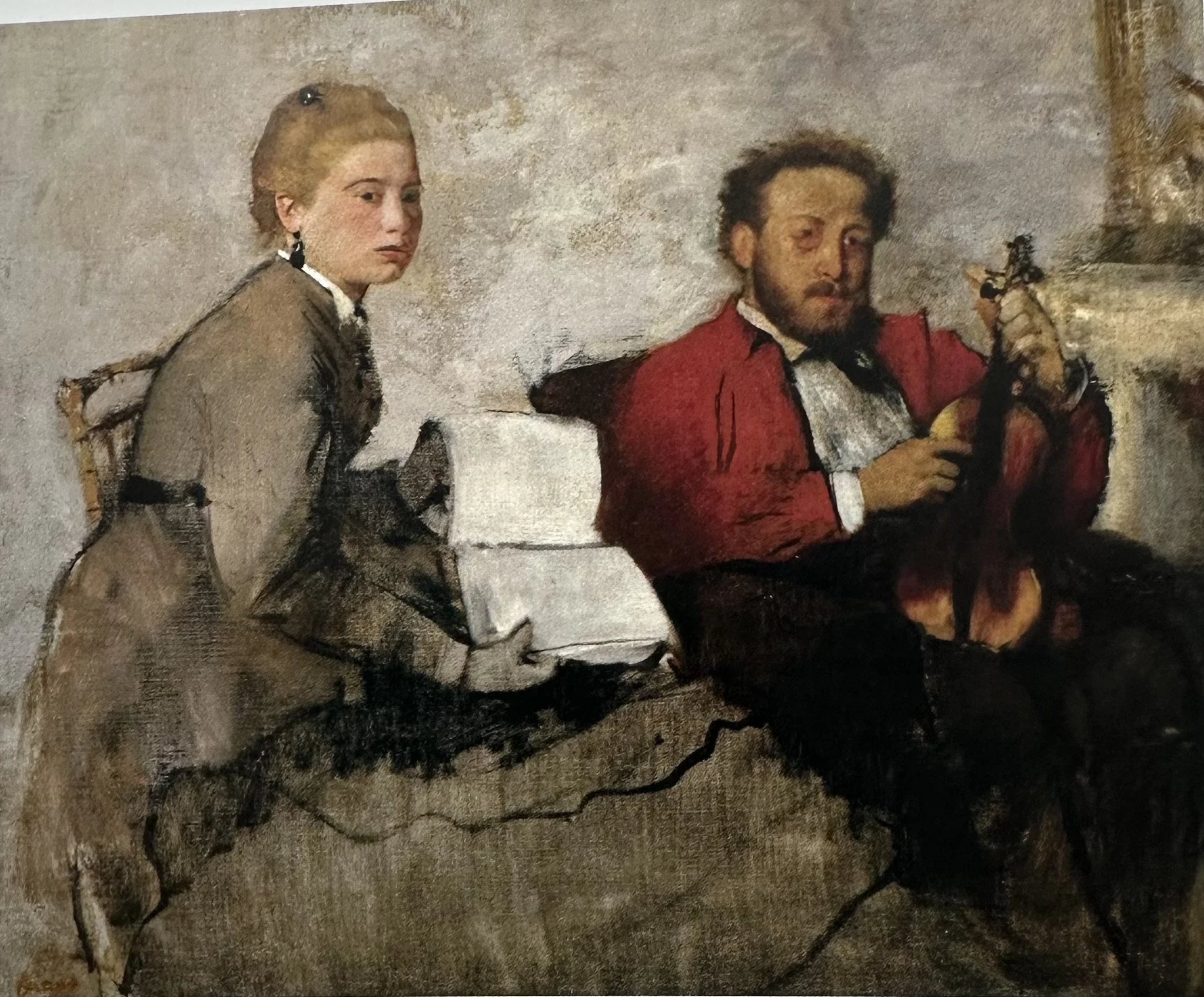
Violinist and Young Woman c. 1871
Acquired by Harris Whittemore in 1921.
Source: Hidden In Plain Sight
James Abbott McNeill Whistler and the Aesthetic Ideal
Whistler was the most extensively represented artist in the Whittemore collection. In addition to owning The White Girl, Harris acquired the Mansfield collection of Whistler etchings and lithographs. Beginning in 1893 and continuing for more than twenty-five years, he purchased oils, watercolors, pastels, and hundreds of prints.
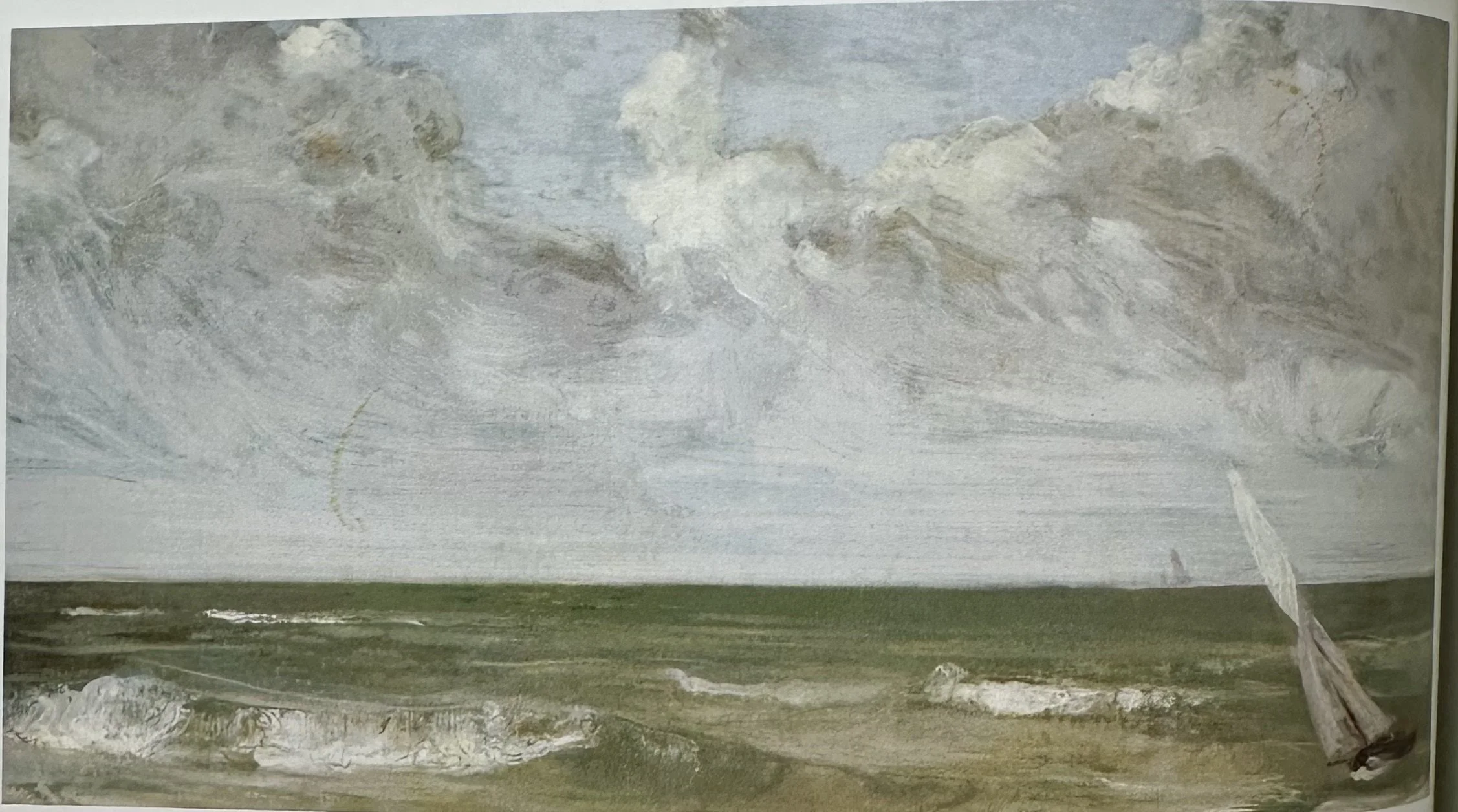
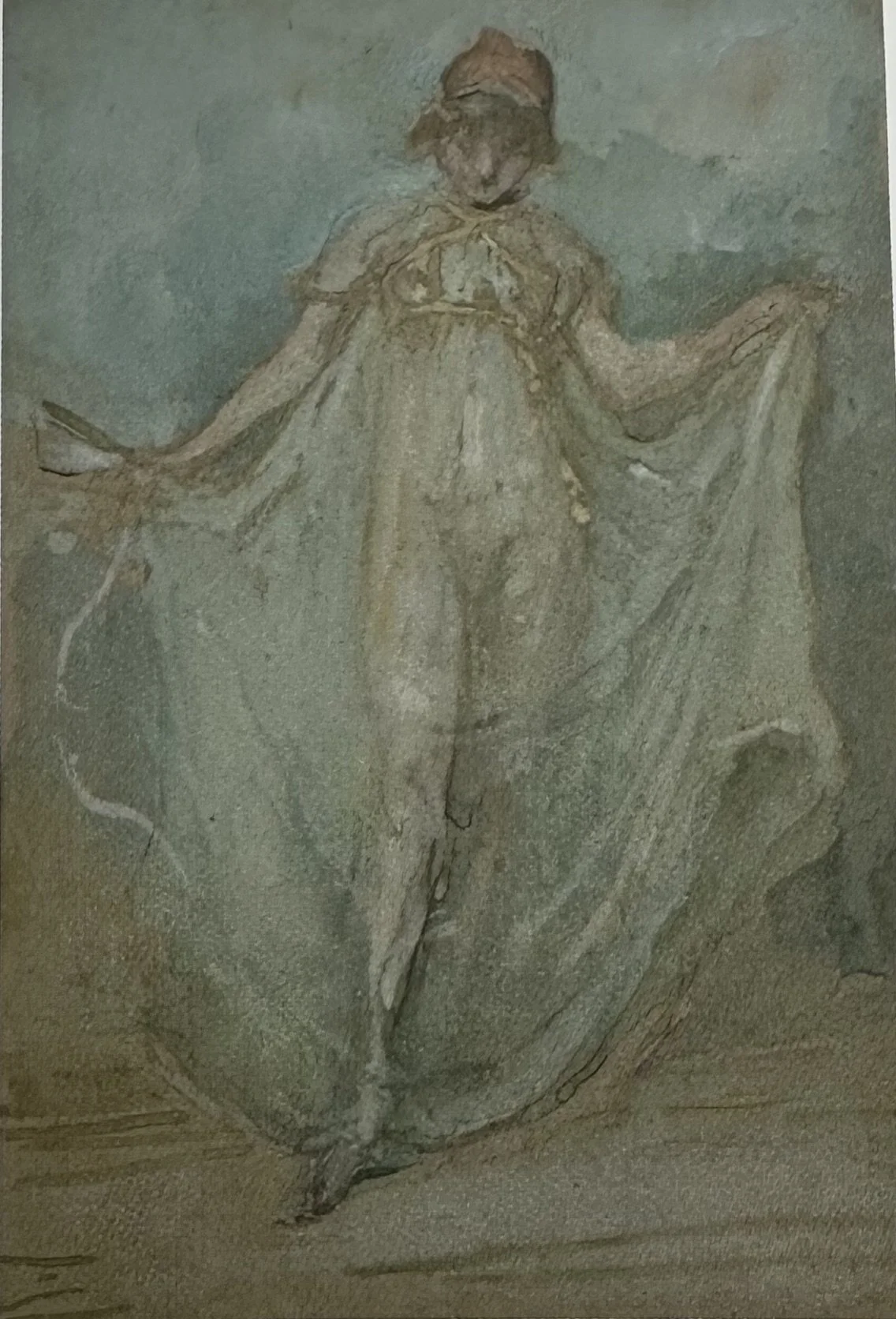
Although Harris did not know Whistler personally, Pope had met and entertained the artist in Paris. Pope’s admiration reinforced Harris’s enthusiasm for Whistler’s work and its emphasis on mood, surface, and decorative harmony. One painting, The Sea from 1865, hung over the fireplace in Harris’s living room and may even have influenced the room’s redesign in 1915, when blue damask upholstery and curtains were introduced to complement its deep marine tones.
James Abbott McNeill Whistler
-
![]()
White Girl c. 1862
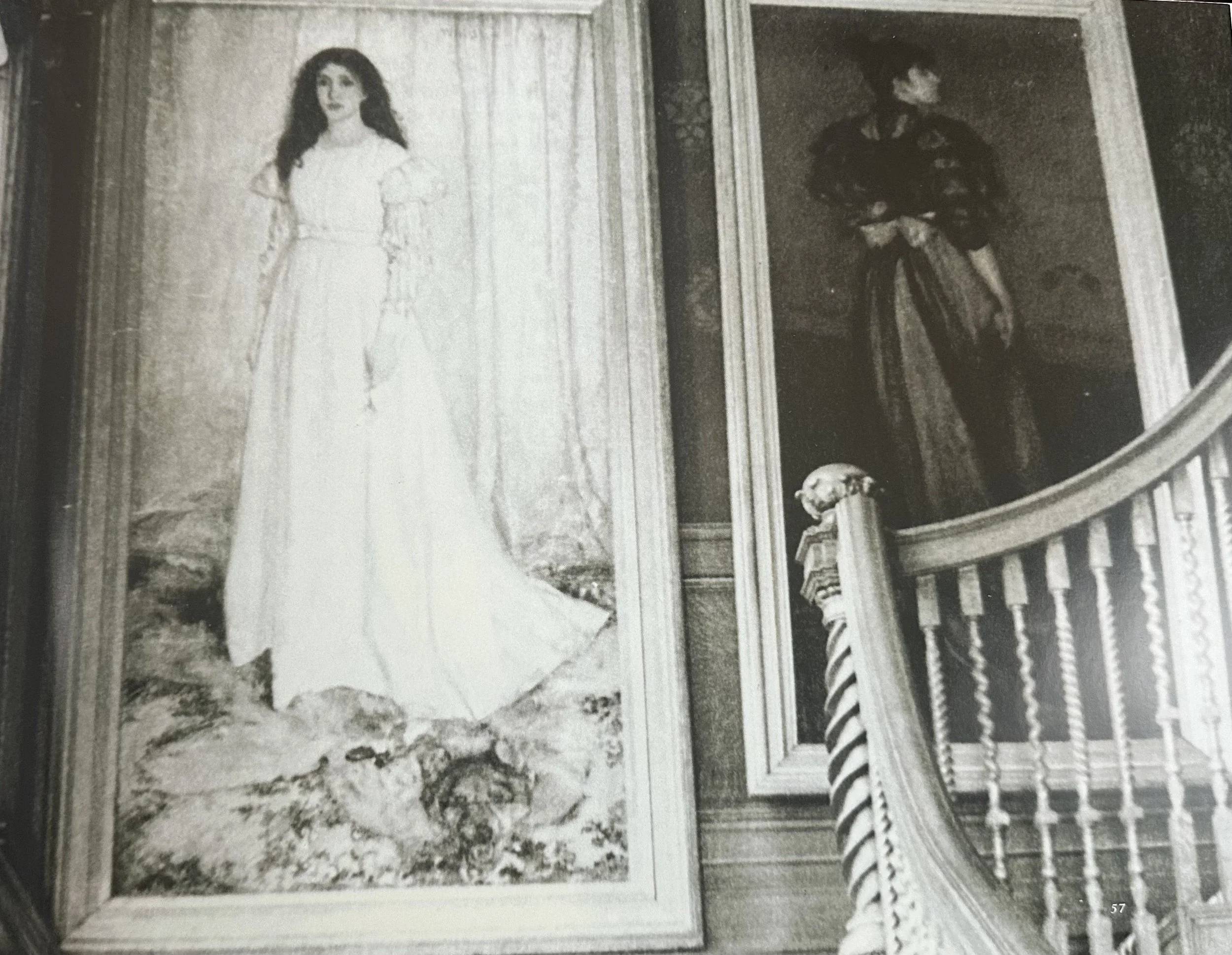
Acquired by Harris Whittemore in 1896. Hung in the stairway of the J.H. Whittemore house.
-
![]()
J.H. Whittemore Home
Whistler’s White Girl hanging in the stairway of J.H. Whittemore home
-
![]()
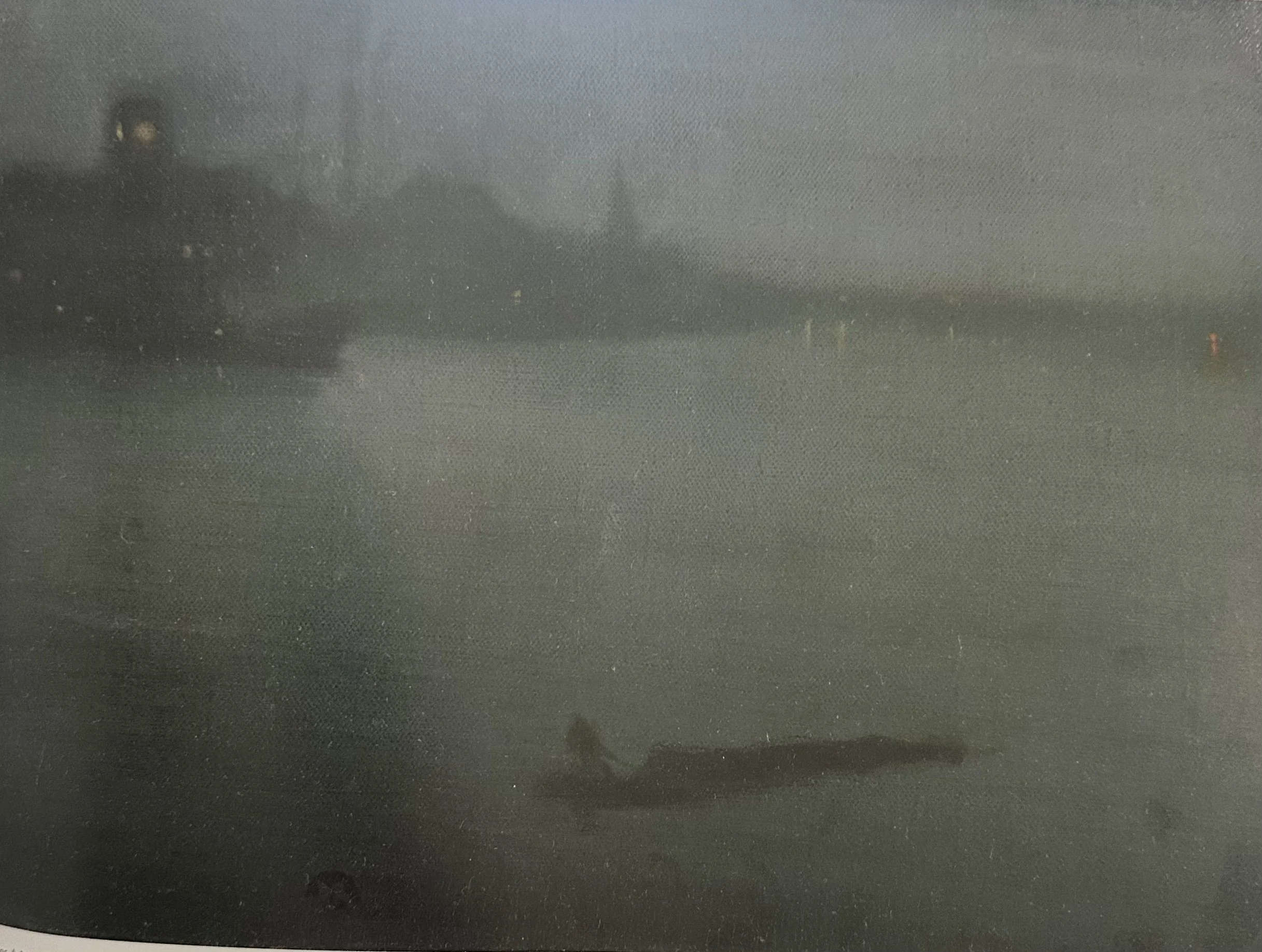
Nocturne in Blue and Silver (Thames Nocturne) 1872 - 1878
Acquired by Harris Whittemore, 1912. Hung in the Harris Whittemore house.
-
![]()
The Sea c. 1865
Acquired by Harris Whittemore before 1910. Hung in Harris Whittemore home.
-
![]()
Green and Blue: The Dancer c. 1893
Acquired by Harris Whittemore 1914.