
Town Farm
About the Town Farm
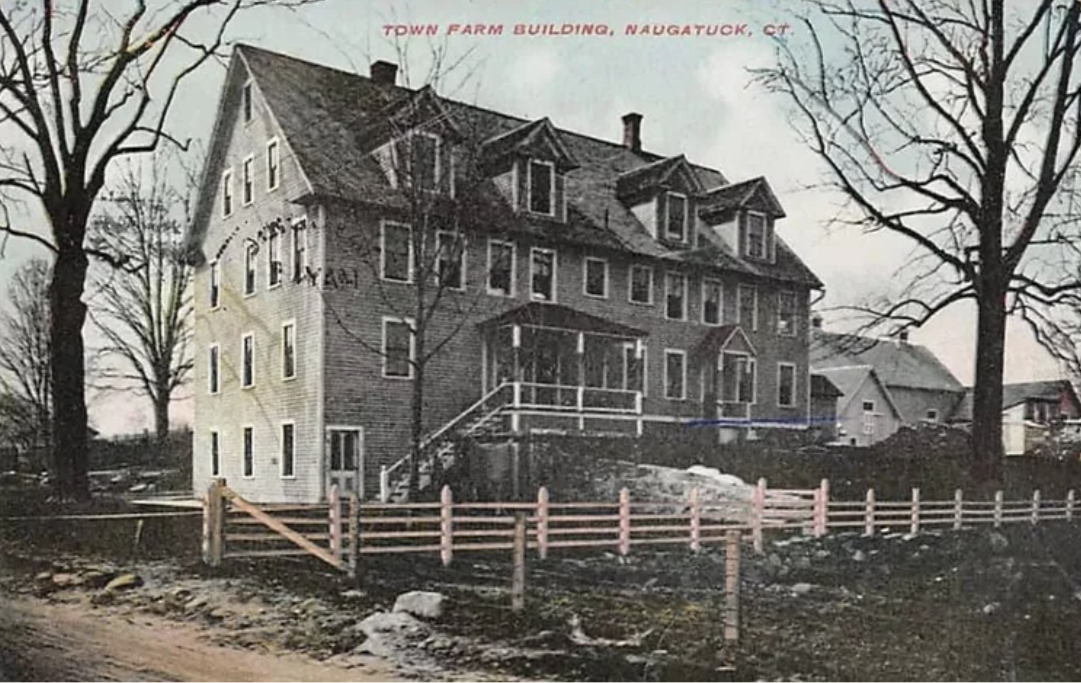
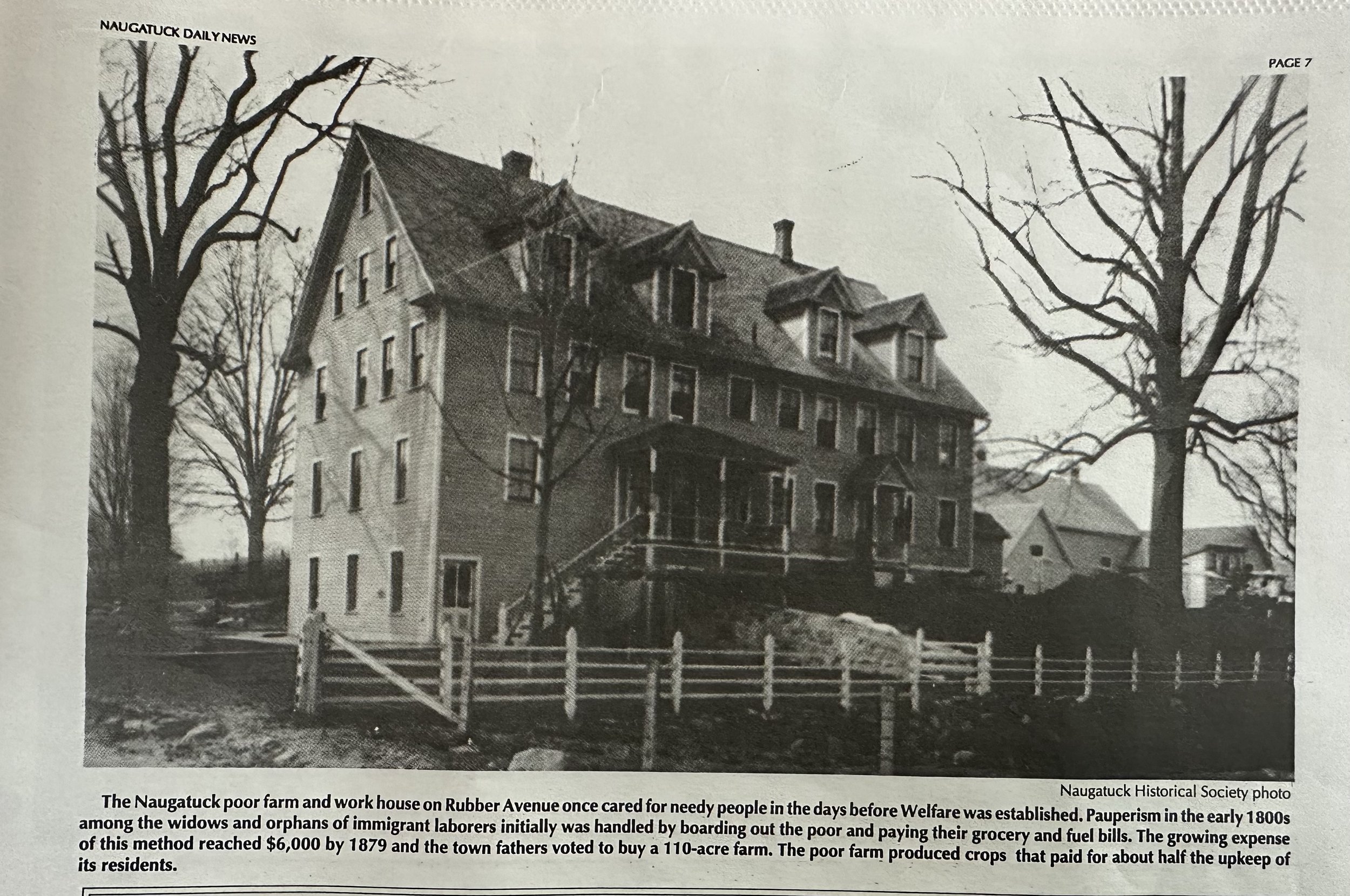
Naugatuck’s Town Farm was established in 1861 on approximately 110 acres along the Millville Road, about one-half mile west of the borough center. The property had previously been the Selden Woodruff farm, and Woodruff Street later took its name from him. When the town purchased the land, a sawmill already stood on the site.
The Town Farm operated as both an almshouse and a working farm. It provided housing and basic care for residents who could not support themselves, including the elderly and indigent, while also functioning as an agricultural operation that helped supply food and offset operating costs. Contemporary accounts noted that it cost about $3,000 annually to maintain, while receipts from farm operations averaged approximately $1,800 per year. More than thirty residents were admitted each year, reflecting the institution’s important role in the community.
Early in its history, Mr. Blumador is recorded as one of the first proprietors of the Town Farm.
Source: Dorothy Almquist Album (Museum Collection)
-
![]()
Source: History of New Haven County, Connecticut (p. 708)
-
![]()
Naugatuck Daily News - Mon, Jul 08, 1957
-
![]()
Naugatuck Daily News - Mon, Jul 08, 1957
-
![]()
Naugatuck Daily News - Mon, Jul 08, 1957
-
![]()
Naugatuck Daily News - Mon, Jul 08, 1957

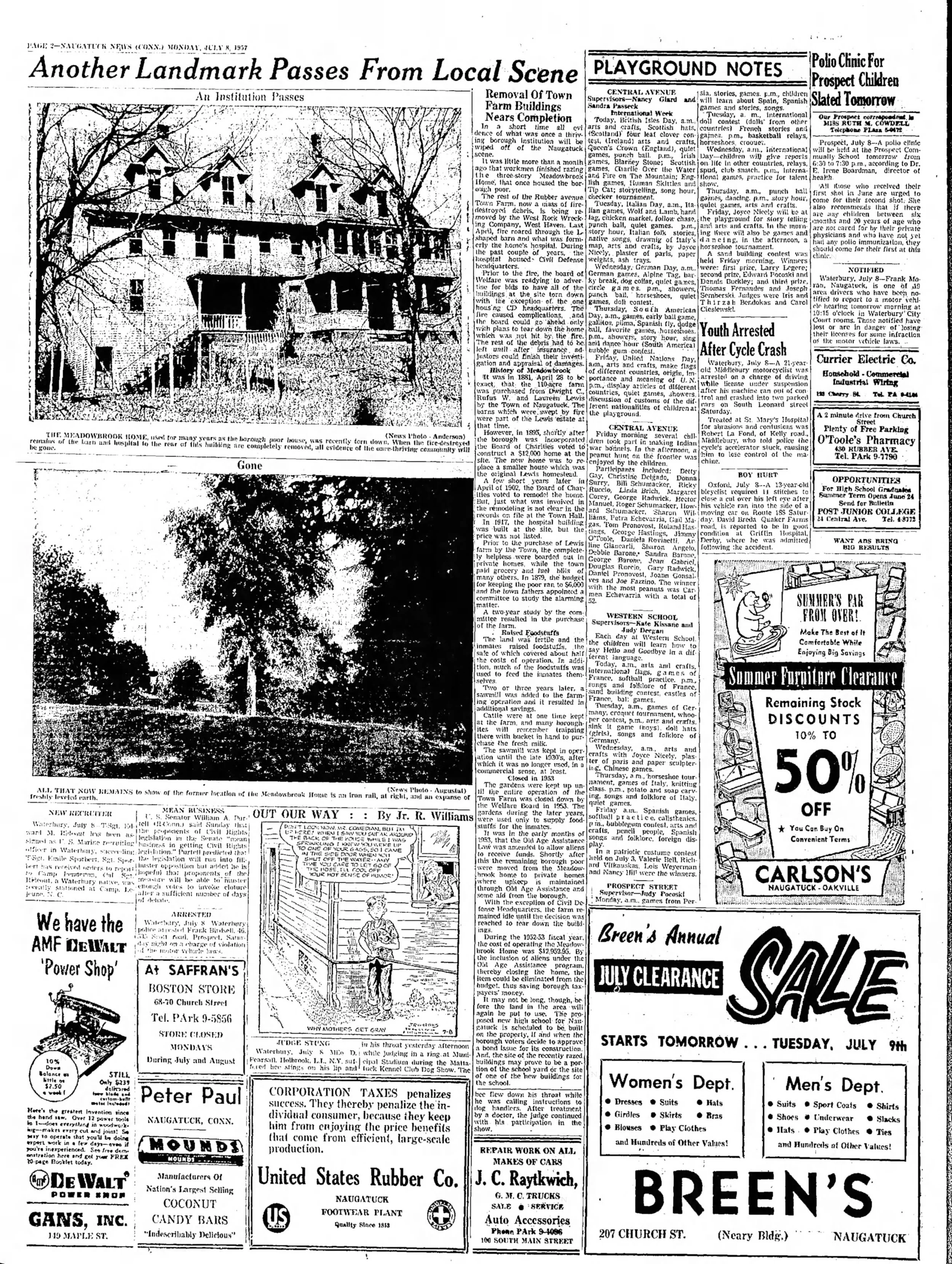
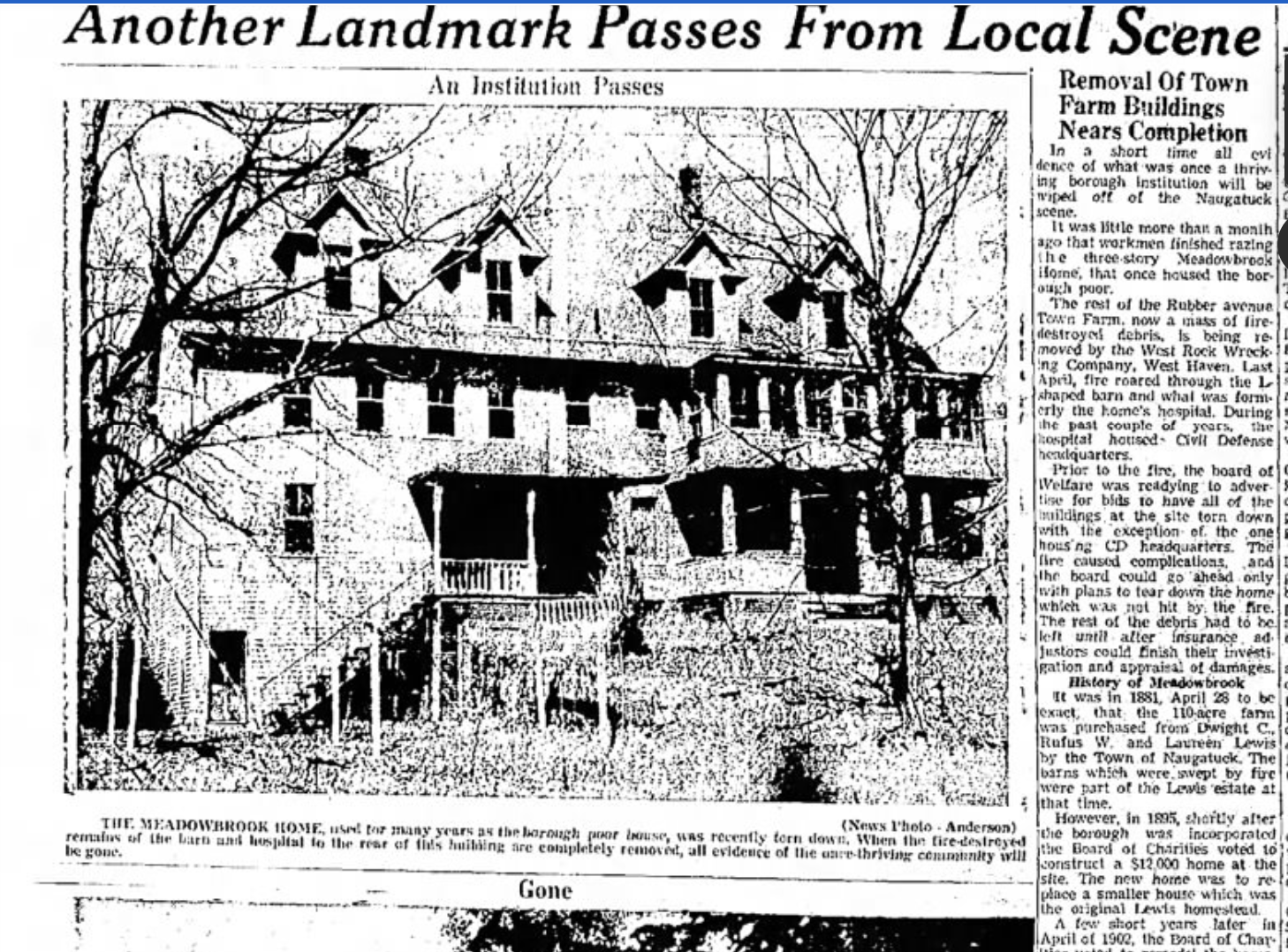
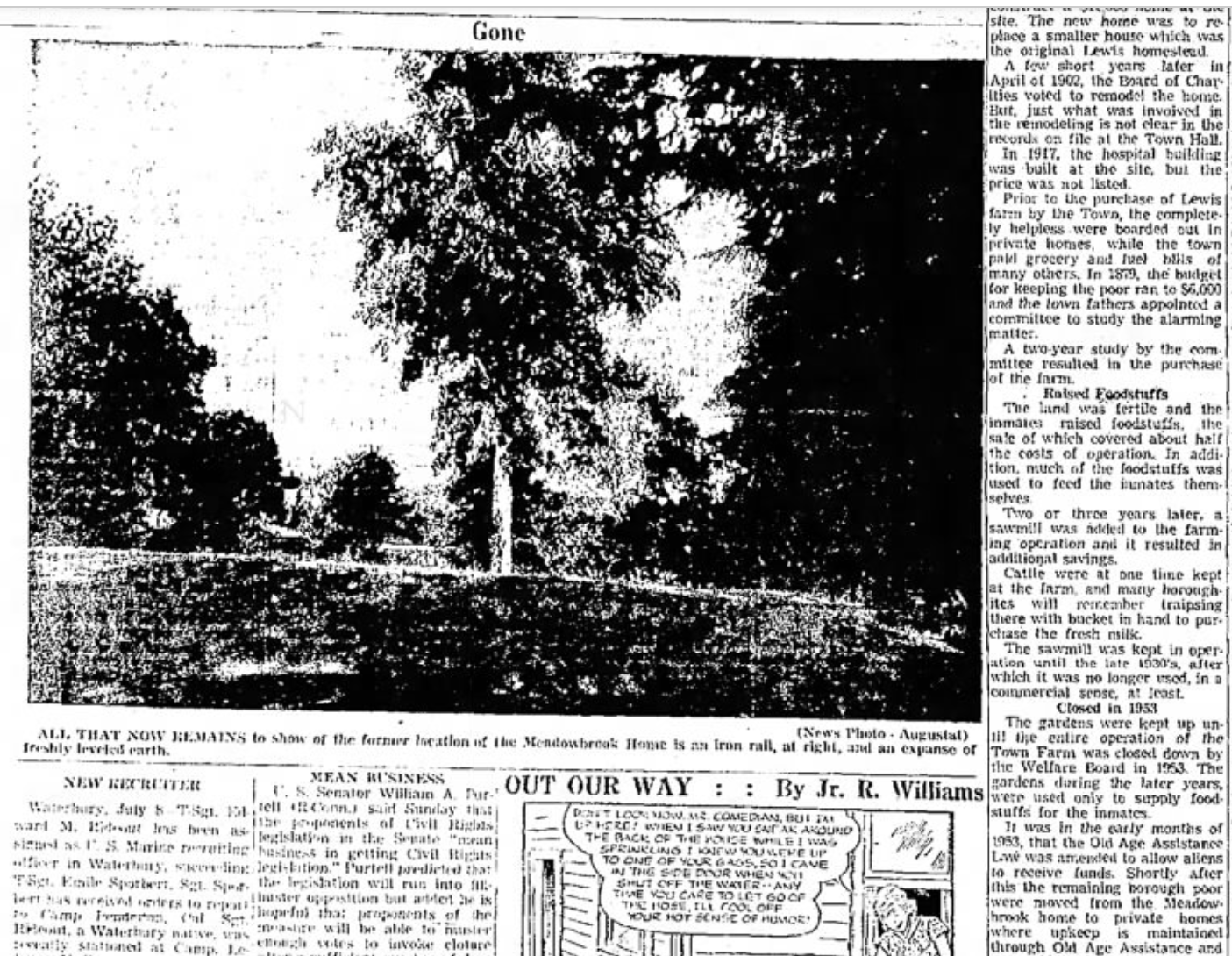
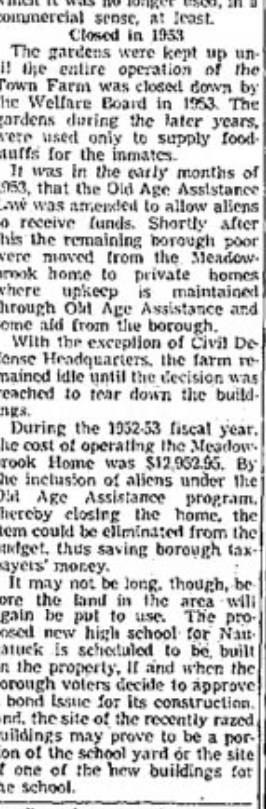
The Town Farm and the Story of John Crane
For more than a century, Naugatuck’s Town Farm on Rubber Avenue served as the borough’s almshouse, providing shelter and care for elderly residents and those in need. The institution remained in operation into the early 1950s, reflecting a time when local communities assumed responsibility for their most vulnerable neighbors. Among those brought to the Town Farm was John Crane, whose life became one of Naugatuck’s most remembered and often retold stories.
After the Civil War ended in 1865, Crane left the Union Army and came to Naugatuck at the age of twenty-four. Like many veterans seeking opportunity, he found steady work in one of the town’s growing industrial plants and was remembered as a dependable and hardworking craftsman.
In 1873, Crane fell in love with a local woman, Miss Mary Robbins. At the time, he had steady employment, money saved, and plans for marriage. Their courtship continued through the year, but when Crane pressed for a wedding date Robbins ultimately refused. The rejection deeply affected him.
Soon afterward, Crane withdrew from public life. He left his job and disappeared from town. Months later, he was discovered living alone in a small shack near Fulling Mill Brook on the outskirts of Naugatuck. There he lived quietly as a hermit. Though he occasionally came into town for supplies, Crane spoke to no one. If he needed something, he wrote his request on paper. Over time, many residents forgot that he had ever spoken at all.
Despite his isolation, Crane quietly accumulated savings. In 1884, he opened an account at the Naugatuck Savings Bank and was known to walk into town regularly to review his account. He would signal for his records, study the figures, and leave without speaking.
In the fall of 1896, when bank tellers noticed he had missed his usual visit, neighbors went to his woodland shack and found him seriously ill. He was brought to the Town Farm, where the borough maintained its almshouse and infirmary for residents requiring care.
Even while gravely ill at the almshouse, Crane refused to speak. According to contemporary accounts, he sometimes signaled to the matron, Mrs. Henry Blumenauer, asking for paper and pencil. Each time he set the paper aside and fell asleep before writing anything.
On the night of April 27, 1898, Crane appeared to realize death was near and urgently motioned again for writing materials. Before they could be brought to him, he died. Whatever message he intended to leave was never written.
After his death, it was discovered that Crane had more money than many realized. In addition to his bank savings, about four hundred dollars in Civil War era currency was found sewn into the lining of his clothing. Though he possessed enough money to pay for medical care, he died at the Town Farm, where he had been brought after falling ill.
Source: Naugatuck Stories and Legends - William G. Leuchars
-
![]()
Undated Postcard
-
![]()
Source: Special Edition of the Naugatuck Daily News (1844 - Naugatuck Sesquicentennial - 1944)
Online Resource Library