
Liberty Bank
333 Church St.
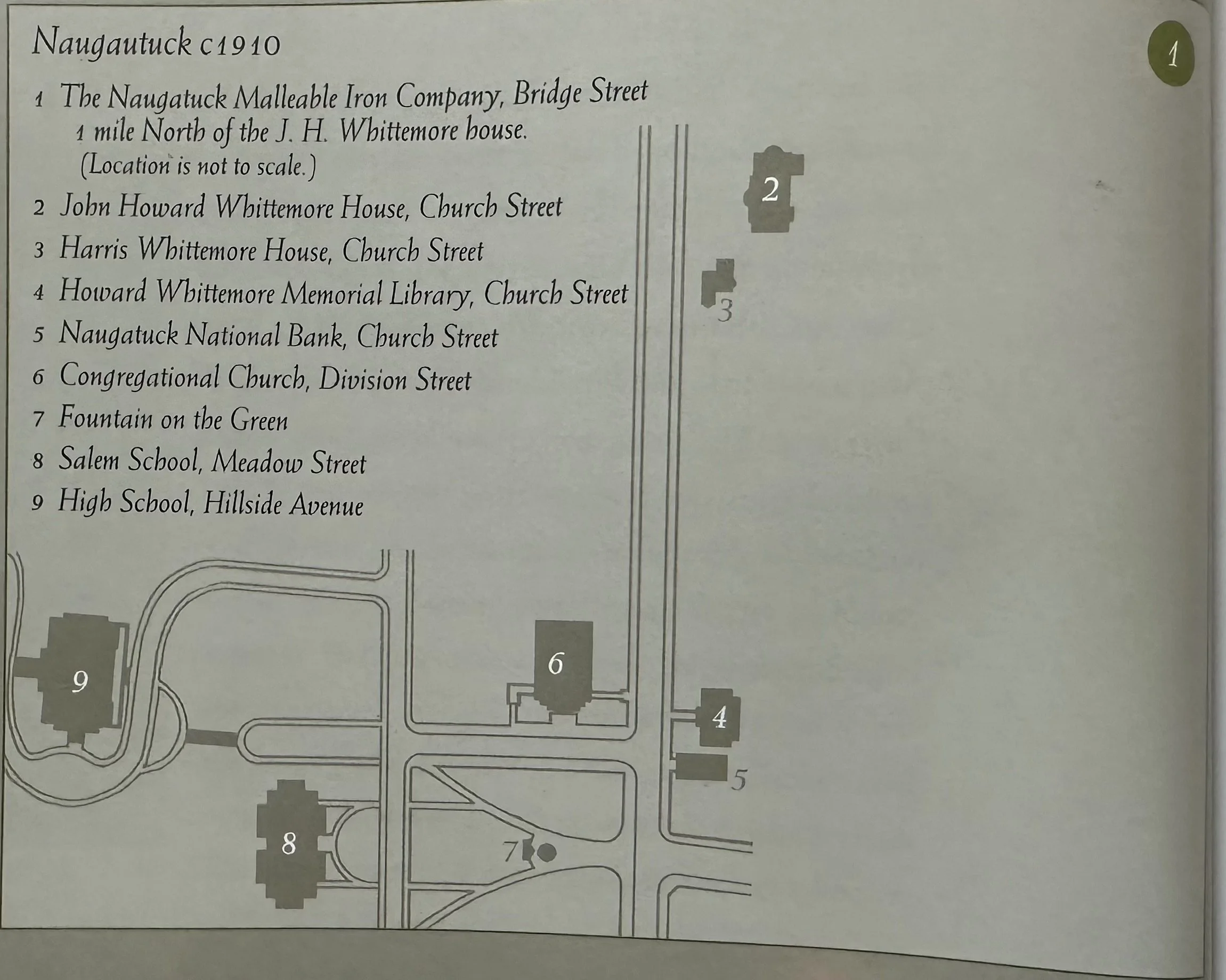
The home of philanthropist John Howard Whittemore once stood on the site where Liberty Bank is now located. As co owner of the Naugatuck Malleable Iron Company, Whittemore selected this prominent site to overlook the iron mills spread across the floodplain below, a vantage point that reflected both his industrial success and his vision for Naugatuck’s future. Designed in 1888 by Stanford White, the large Neo Classical Revival residence featured multiple gables and pavilions and stood as a symbol of the Whittemore family’s prominence. The house was ultimately lost to fire.
Today, the site is occupied by a Neo Victorian bank building bordered by stone walls and pillared gateways that date from the period of the Whittemore estate. Liberty Bank was constructed in 1974 and expanded in 1998, blending modern design with surviving elements of the original property. This location was designated as part of the Naugatuck Center Historic District on July 30, 1999.
It is a happy occurrence to find a successful businessman who is also a generous benefactor. To find a successful benefactor who is also skilled in aesthetic judgment is uncommon. The Whittemores belonged to this exceptional group, successful, generous, discerning, and willing to invest in the very best. Their decision to seek leading designers and builders distinguished them from contemporaries such as the Tuttles, the Chases, and the Popes, who were constructing new homes at the same time using more local talent. J. H. Whittemore deliberately recruited one of the nation’s foremost architectural firms to design his residences and to shape his broader vision for a refined and gracious Naugatuck.
That firm was McKim, Mead & White, which rose to prominence in the early 1880s designing country homes for wealthy clients. By the end of that decade, the firm had become the leading architectural practice in the United States, responsible for highly publicized urban buildings and advocating a return to classical architectural forms. Their work replaced brownstone streetscapes with simplified masses inspired by Georgian architecture from the American past, itself rooted in European precedents familiar to Americans returning from grand tours of England and Italy. By 1887, McKim, Mead & White were simultaneously designing the Boston Public Library, Madison Square Garden, and the New York Life Insurance Building.
The firm earned a reputation for durable and efficient construction and approached projects holistically, designing landscapes, interiors, and furnishings as unified environments. In this work, they collaborated closely with Frederick Law Olmsted, widely regarded as the father of American landscape design and responsible for major public park projects such as Central Park in New York City and park systems in Boston, Cleveland, and Chicago. J. H. Whittemore hired Charles Eliot, then senior partner in the Olmsted firm, to design the landscape at the Whittemore farm in Middlebury and the greenway connecting Naugatuck to Middlebury. When Eliot fell ill and later died at the age of thirty seven, Whittemore turned to Warren Manning, superintendent of planting in the Olmsted firm. Manning later established his own Boston practice in 1896 and worked with the Whittemores for the next thirty five years, completing seventeen landscape projects for the family and another eighteen in the surrounding area.
The Whittemores embraced this comprehensive design philosophy and brought the firm’s preferred contractors to Naugatuck. Among them was Milton Napier, who worked for McKim, Mead & White and later became president of its affiliated construction firm, the Tide Water Building Company. Napier came to Naugatuck to build two major projects, the town high school and one of its churches. Tide Water continued working for the Whittemores on later buildings in Naugatuck, Middlebury, Avon, and Cleveland, and also constructed a house for Howard Tuttle, the son of Whittemore’s business partner. Napier designed and built the Middlebury Center School in 1896 and renovated Harris Whittemore’s summerhouse at Lake Quassapaug in 1901.
The first commission J. H. Whittemore gave to McKim, Mead & White was a new family home to replace his wife Julia’s childhood residence on Church Street. The earlier Italianate villa, where the couple had lived since their wedding, had already been modernized with verandas and larger windows. The new house, dated 1888 in the architectural drawings, was initially designed in brick but soon revised to clapboard. This change aligned with the Colonial Revival style popularized by the firm, a movement inspired by nostalgia for early American life following the 1876 Philadelphia Centennial. The Colonial Revival influenced architecture, decorative arts, and town planning, encouraging designs believed to represent an idealized early American aesthetic.
The Whittemore home featured a symmetrical façade with columns, dormers, and classical detailing. According to legend, the house contained thirty rooms. Its scale was undeniable. The façade measured 123 feet wide, while the main block was forty seven feet deep and encompassed more than 17,000 square feet across three floors. A large rear wing housed the kitchen and service areas. A circular central porch opened into a grand entrance hall extending the full depth of the house. A reception room stood to the right and an office to the left, with the living room located beyond the reception room on the south side. A billiard room with a small veranda occupied the rear of the living room.
A two story veranda stretched across the south end of the house, filled with flowers on the first floor during warm months and providing private outdoor space for second floor bedrooms. On the north side, beyond the office, was a formal dining room measuring forty eight feet in length. Behind the entrance hall, a wide passage reminiscent of a European long gallery connected the dining room and living room. An elaborate staircase with a multistory stained glass window rose behind the reception room, adjacent to an alcove with a fireplace.
Bedrooms for family and guests occupied the second floor. The third floor held storage rooms, seven servant bedrooms, and a bathroom, all served by a dumbwaiter. Interior finishes reflected the Colonial Revival style. The main hall and reception room were paneled in dark stained wood with fluted columns and fielded panels. Window seats and alcoves appeared throughout the first floor. Hallway ceilings featured boxed beams. The office walls were leather covered with brass headed studs arranged in a geometric pattern. The living room was lined with bookcases half the room height, with space above for paintings and decorative objects. The dining room was richly paneled and centered on a carved Georgian mantel with a patterned marble fireplace surround. Above the wainscoting, walls were papered with a dark floral design inspired by the Arts and Crafts Revival, which emphasized handcraft over industrial production.
Although not included on the walking tour, the final McKim, Mead & White residential project for the family was the home of Harris Whittemore, completed in 1901 on Church Street just south of J. H. Whittemore’s residence. Church Street was planted with trees between the sidewalk and roadway, creating a shaded residential corridor. Across the street lived other industrial families such as the Tuttles and the Lewises. To the rear, the Whittemore properties extended toward the railroad tracks and the Goodyear ditch. J. H. Whittemore maintained openness while screening these views with planted trees, and by the end of the century, a landscaped carriage house stood beyond the ditch.
Harris Whittemore’s home was more compact than the family country house but echoed its Colonial Revival style. Measuring seventy one feet wide and thirty one feet deep, with a rear wing, it was roughly half the size of the Middlebury residence. The house featured projecting end gables and was clad in thick shingles reportedly made from trees harvested on the Middlebury property. The front entrance was set to one side beneath a columned porch. Inside, a large central hall organized the plan, with a living room to the right, an office to the left, and a dining room in the rear wing. A grand staircase rose behind the office.
On the second floor, a large bedroom with fireplace and private bath occupied the space above the living room. Two front bedrooms shared a bath, while two smaller bedrooms and a service stairway were located in the wing. The third floor held three bedrooms and a playroom. Harris redecorated the house in 1915, adding an elevator, repainting and repapering throughout, and installing gilded canvas ceilings in several principal rooms. Photographs from 1941 provide insight into the interior character. Window seats and built in benches reinforced the Colonial Revival aesthetic. The entrance hall was wallpapered above the wainscoting and finished with boxed beam ceilings. The living room featured stained wood paneling and a ceiling with plaster fretwork inspired by Jacobean manor houses. The Georgian style dining room included raised panels, a dentil frieze, and a coved cornice. Opposite the dining room door stood a large half round conservatory filled with palms and ferns. The office was lined with low bookcases and fabric covered walls above.
The interiors of the Whittemore homes were further distinguished by an extraordinary private art collection. The Whittemore collection was extensive, comprising more than one thousand works of art, not including hundreds of Japanese prints, decorative arts, and other less documented pieces. Among these holdings were more than thirty paintings by Claude Monet, more than thirty five works by Edgar Degas, more than seventy paintings, pastels, and prints by Mary Cassatt, and nearly six hundred works across a range of media by James Abbott McNeill Whistler.
Unlike many of his contemporaries, Harris Whittemore did not seek public recognition for his collection, treating it instead as a largely private pursuit. The paintings were not confined to galleries or formal exhibition spaces, but hung throughout the rooms the family lived in, including entrance halls, living rooms, studies, dining rooms, and bedrooms. Art was integrated into daily life rather than displayed for public acclaim.
Although driven primarily by Harris Whittemore’s enthusiasm, the collection was clearly a family endeavor. Early acquisitions from the 1890s were displayed in the Naugatuck home shared by J. H. and Harris Whittemore. During this period, Harris typically selected the works, while his father provided the funding, particularly for the most valuable paintings. As time passed and the families came to live in separate residences, detailed records were kept indicating which family member owned or insured individual works. Because the J. H. Whittemore Company occasionally financed purchases and related expenses, it ultimately became the legal owner of much of the collection, regardless of where the artworks were physically displayed.
The house was outfitted with the finest materials available from New York suppliers, including plumbing, marble, and electrical fixtures. Modern refrigeration equipment was installed, along with full electrical and telephone service. The Whittemores furnished the home with assistance from leading decorators such as the A. H. Davenport Company, which frequently collaborated with McKim, Mead & White and later furnished the White House renovations of 1902. Additional furnishings were purchased from the Schmitt Brothers Company of New York and the William Otis Company of Boston. The family blended newly made reproduction furniture with inherited antiques acquired in 1893 from Julia Whittemore’s grandmother’s home. In 1905, Harris purchased a Steinway piano with a specially ordered case. Furnishings represented a range of historical styles, including Queen Anne, Empire, and Federal, reflecting the Whittemores’ enduring appreciation for classical design interpreted through the lens of modern craftsmanship.
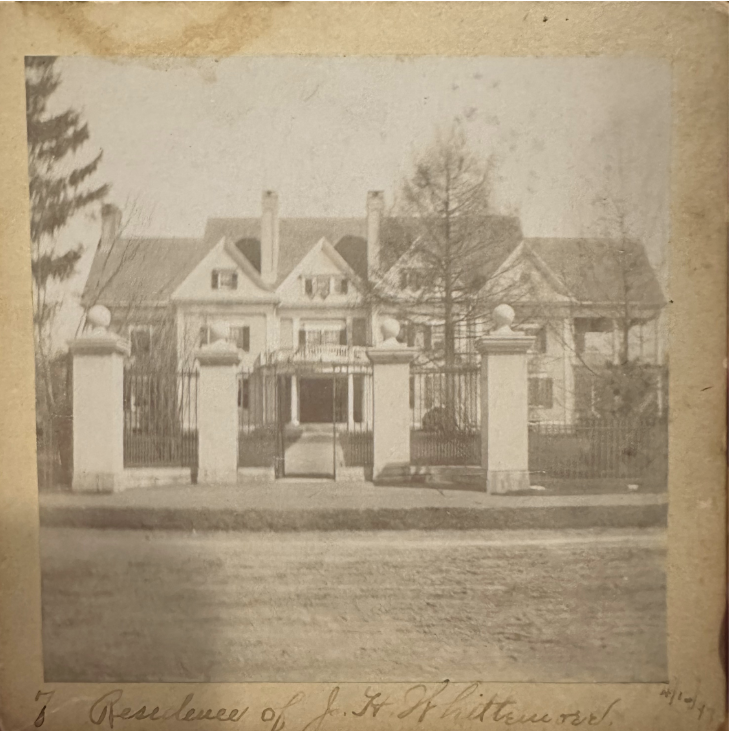
John Howard Whittemore Mansion Undated
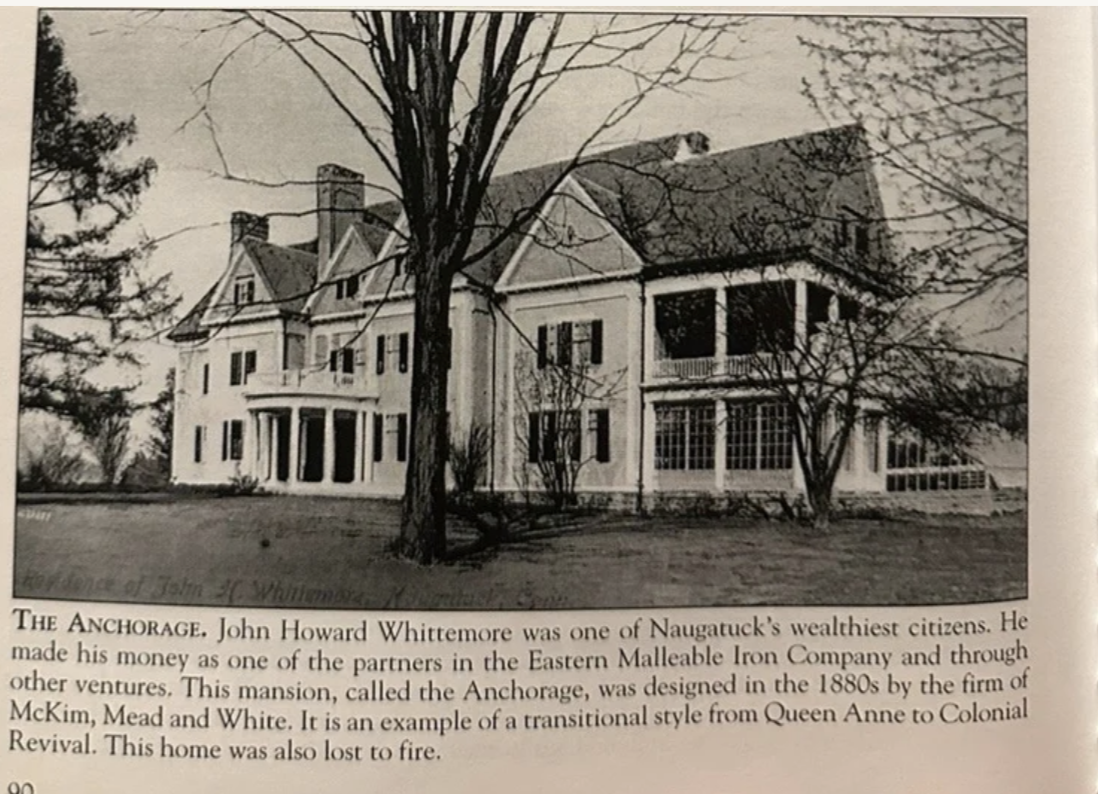
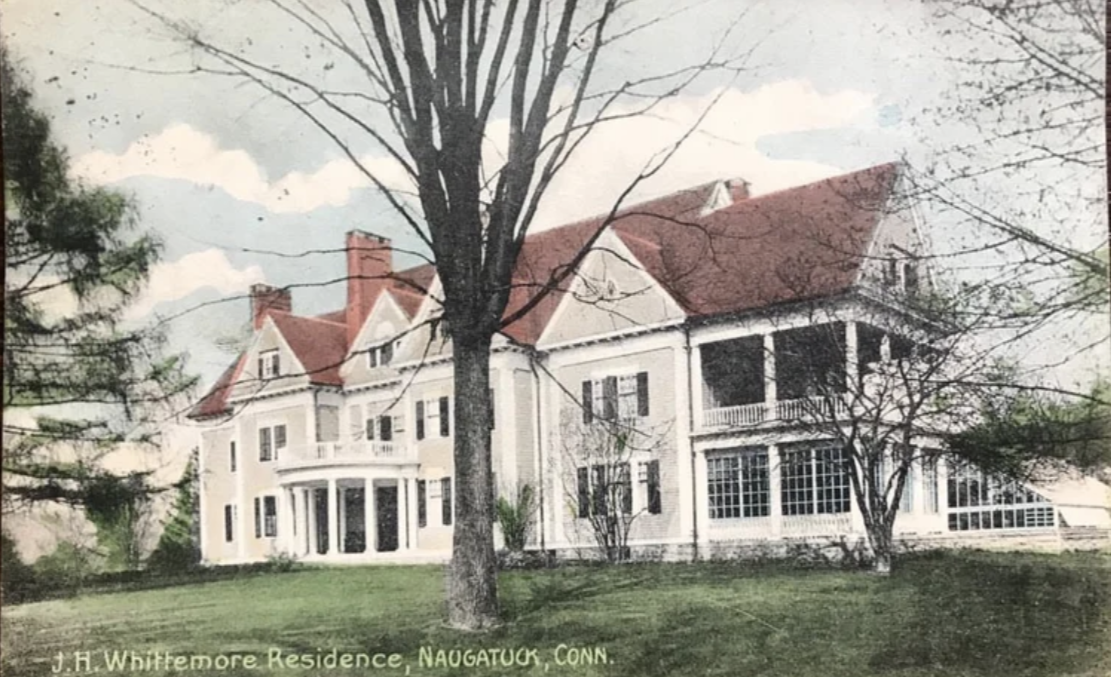
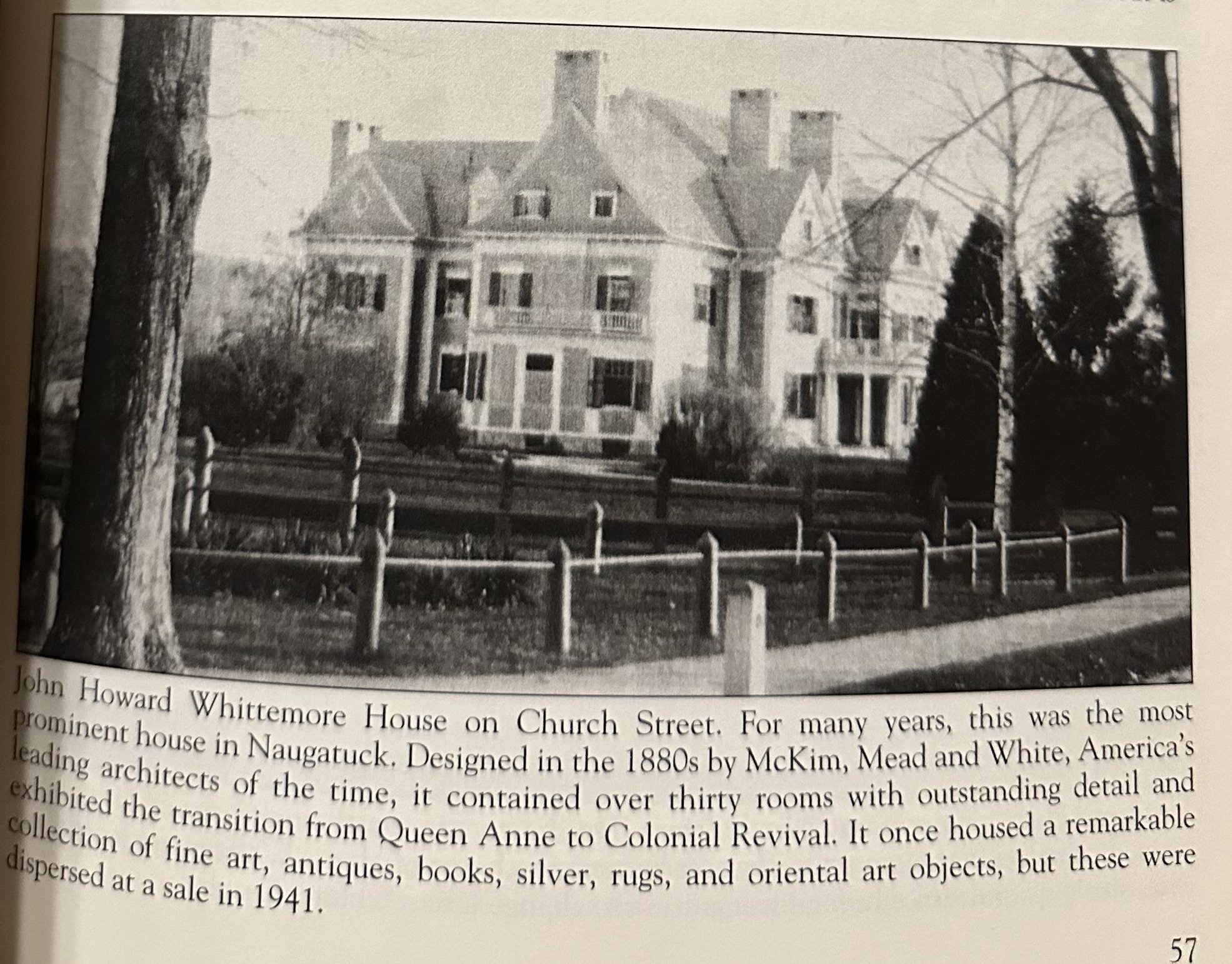
Images of America - Naugatuck & Naugatuck Revisited Dana J. Blackwell and The Naugatuck Historical Society (November 1, 1996) Ron Gagliardi (August 25, 2004)
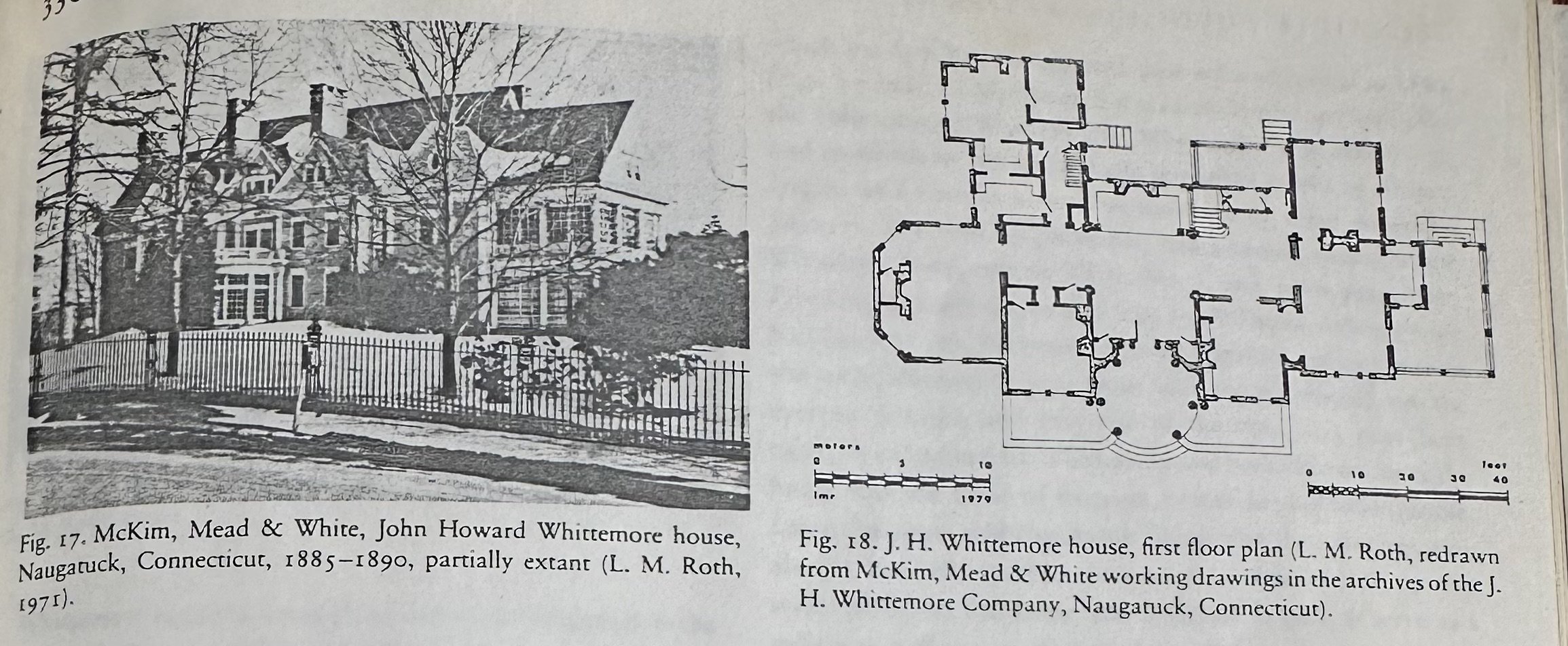
McKim, Mead & White Architects - Leland M. Roth (1985)
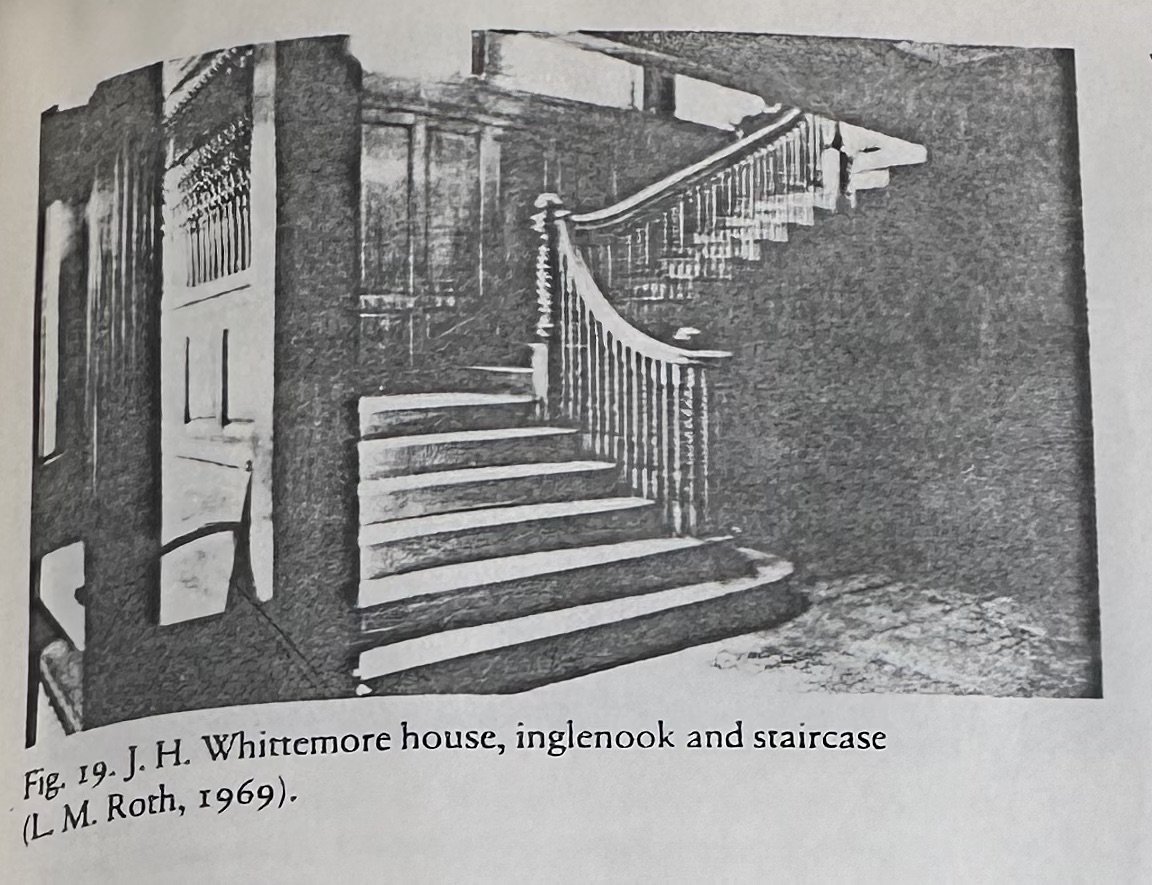
McKim, Mead & White Architects - Leland M. Roth (1985)
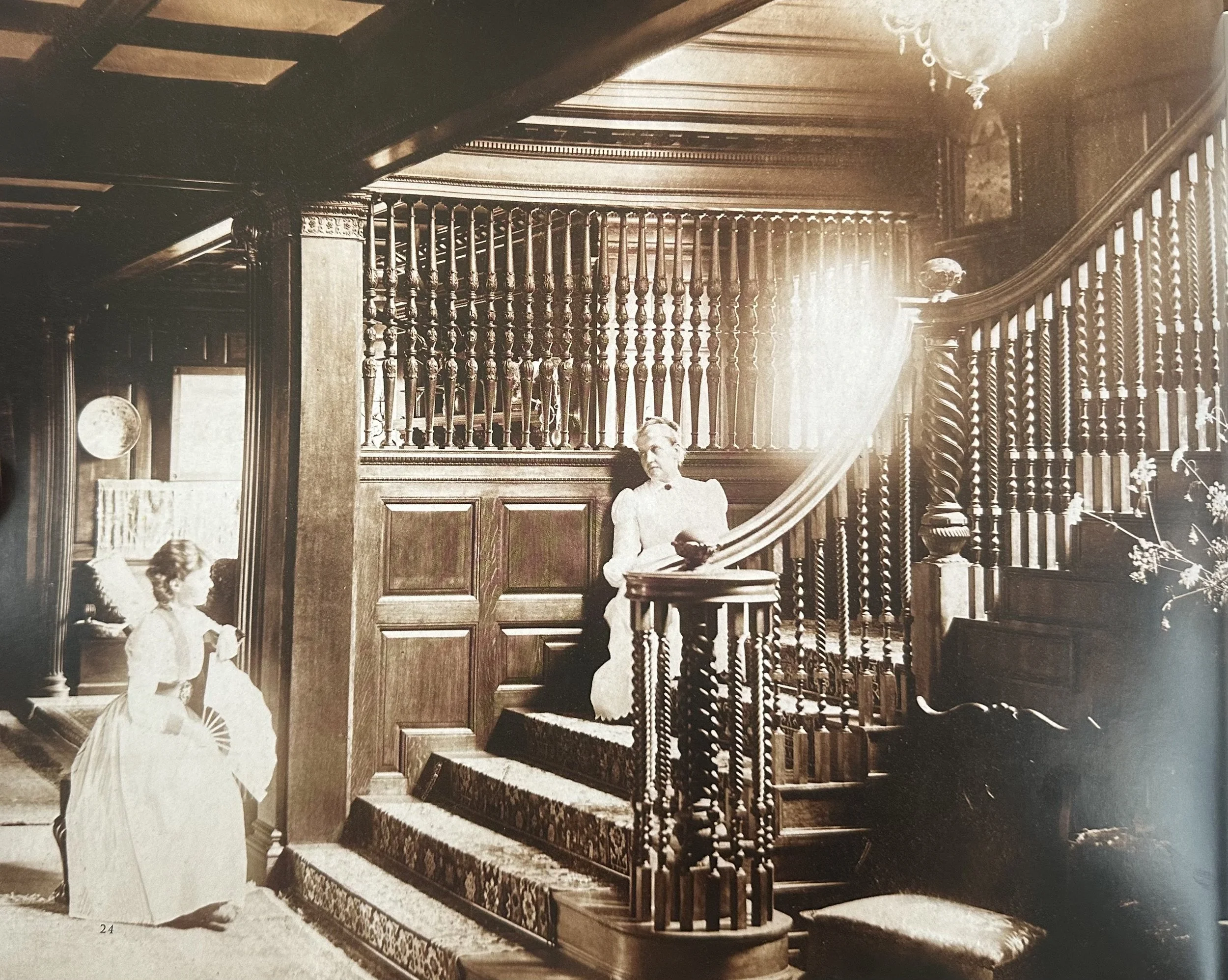
Mrs. Harris Whittemore and Mrs. J.H. Whittemore in the stairwell and cross hall of J.H. Whittemore house - c. 1895
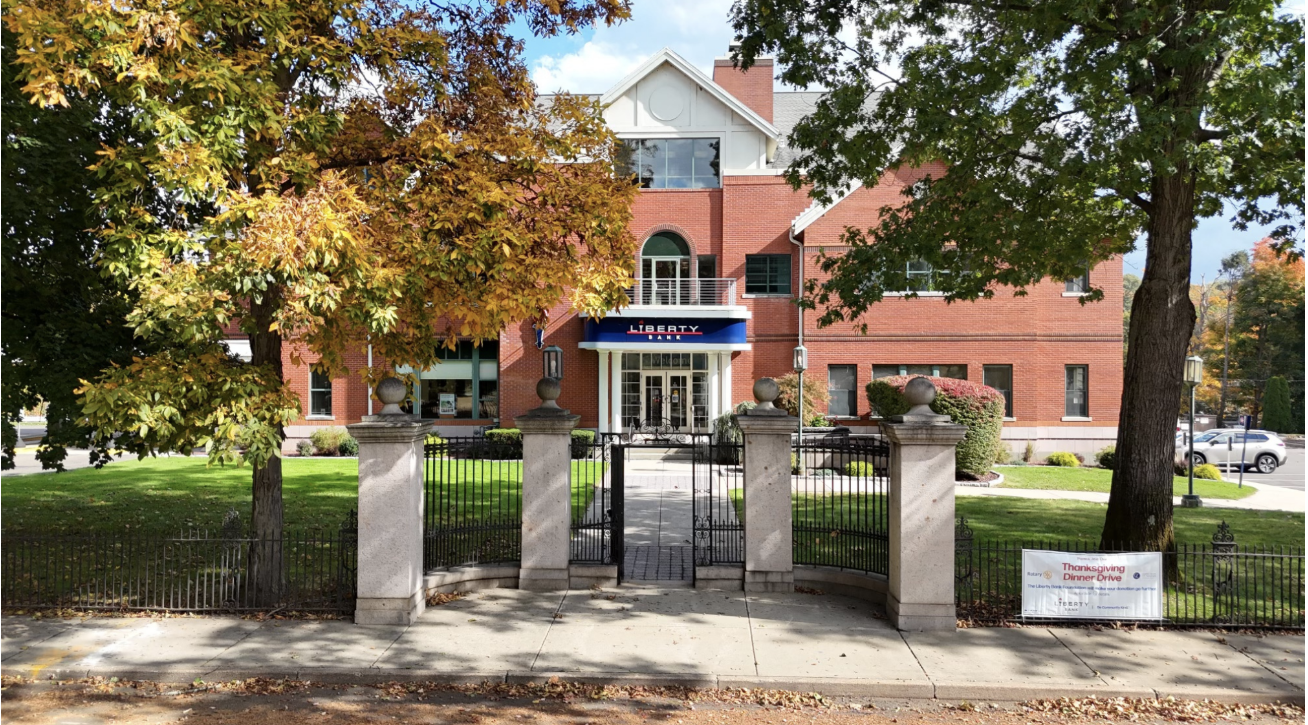
Liberty Bank - 10/2024 Photo Credits: Taylor Bennett

Whistler's White Girl hanging in the stairway of J.H. Whittemore's home in Naugatuck.
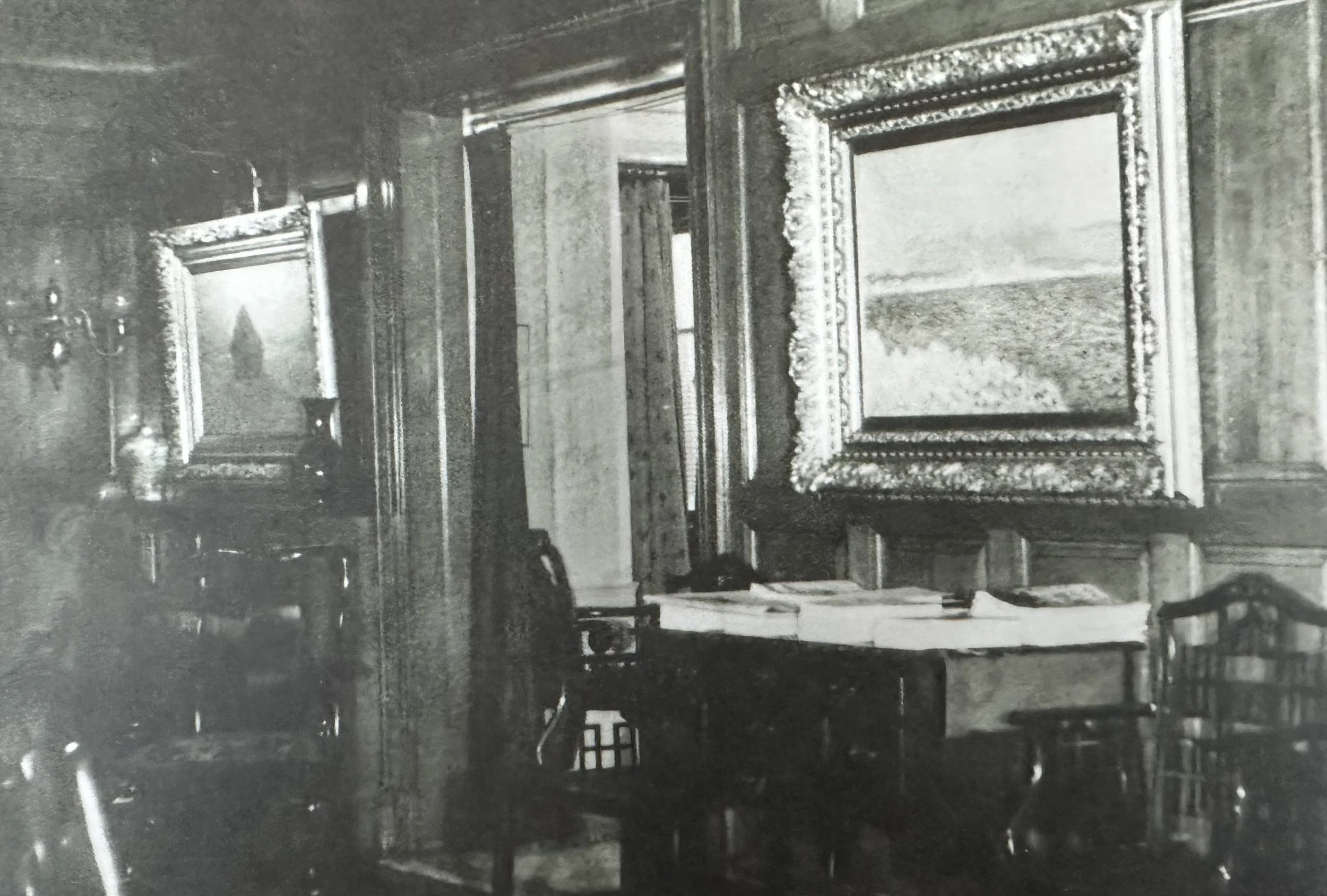
Monet - Grainstack, Sun in the Mist, 1891 -- Acquired by Harris Whittemore, 1891. Hung in J.H. Whittemore's house.
Source: Hidden In Plain Sight
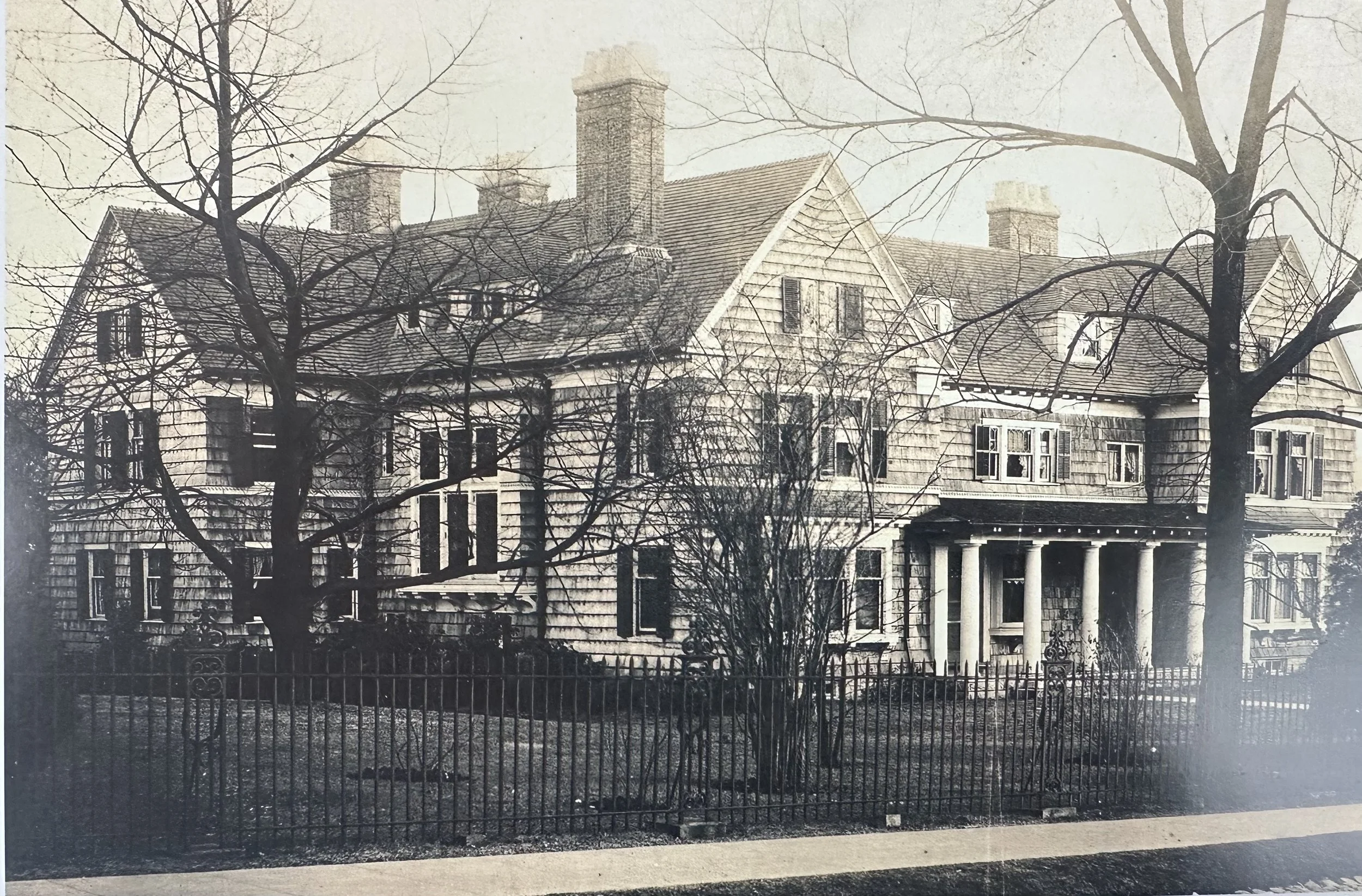
Harris Whittemore home. Located on Church St. next to parents' home.
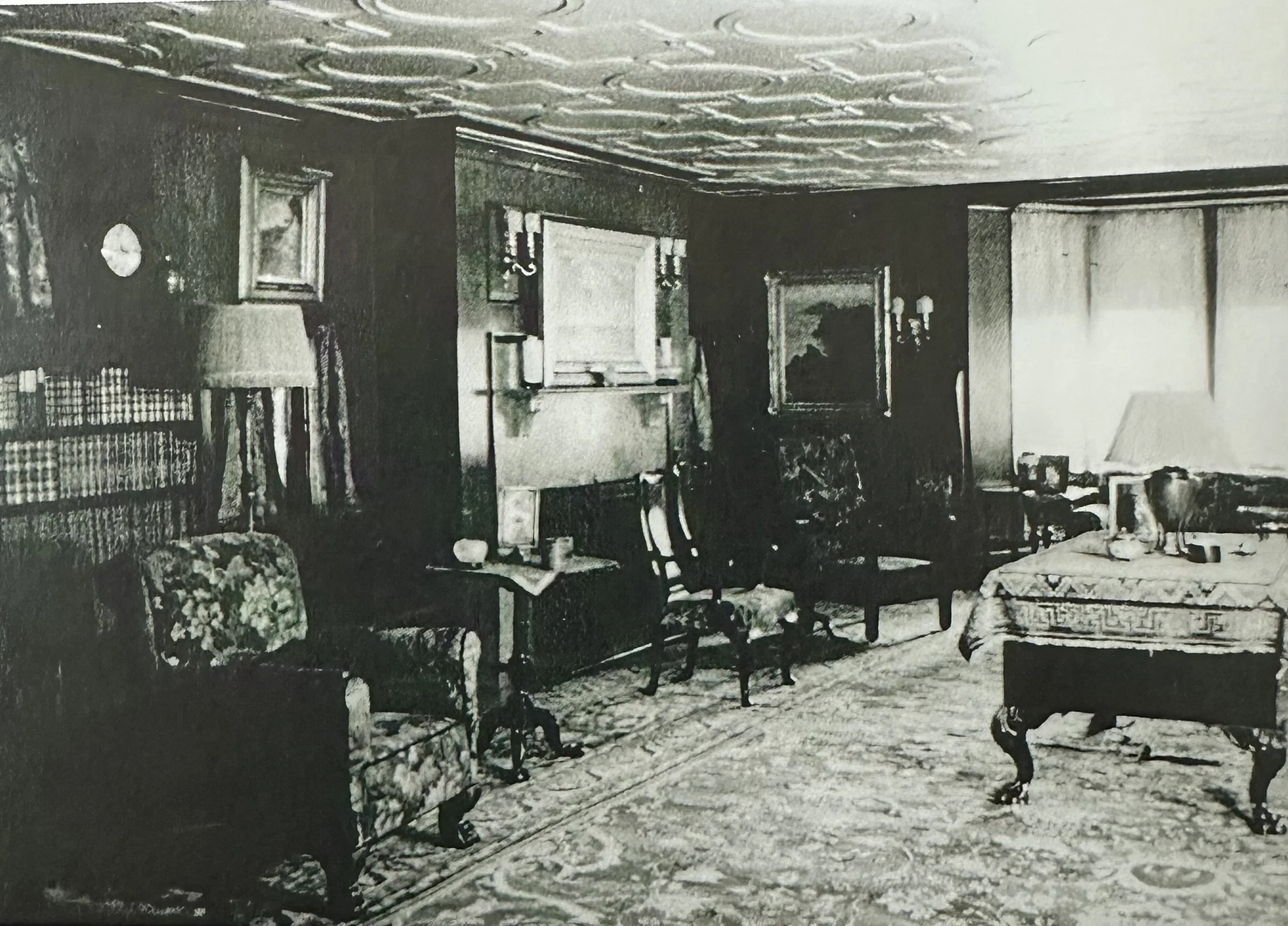
The living room in Harris Whittemore's house was embellished with a Jacobean ceiling.
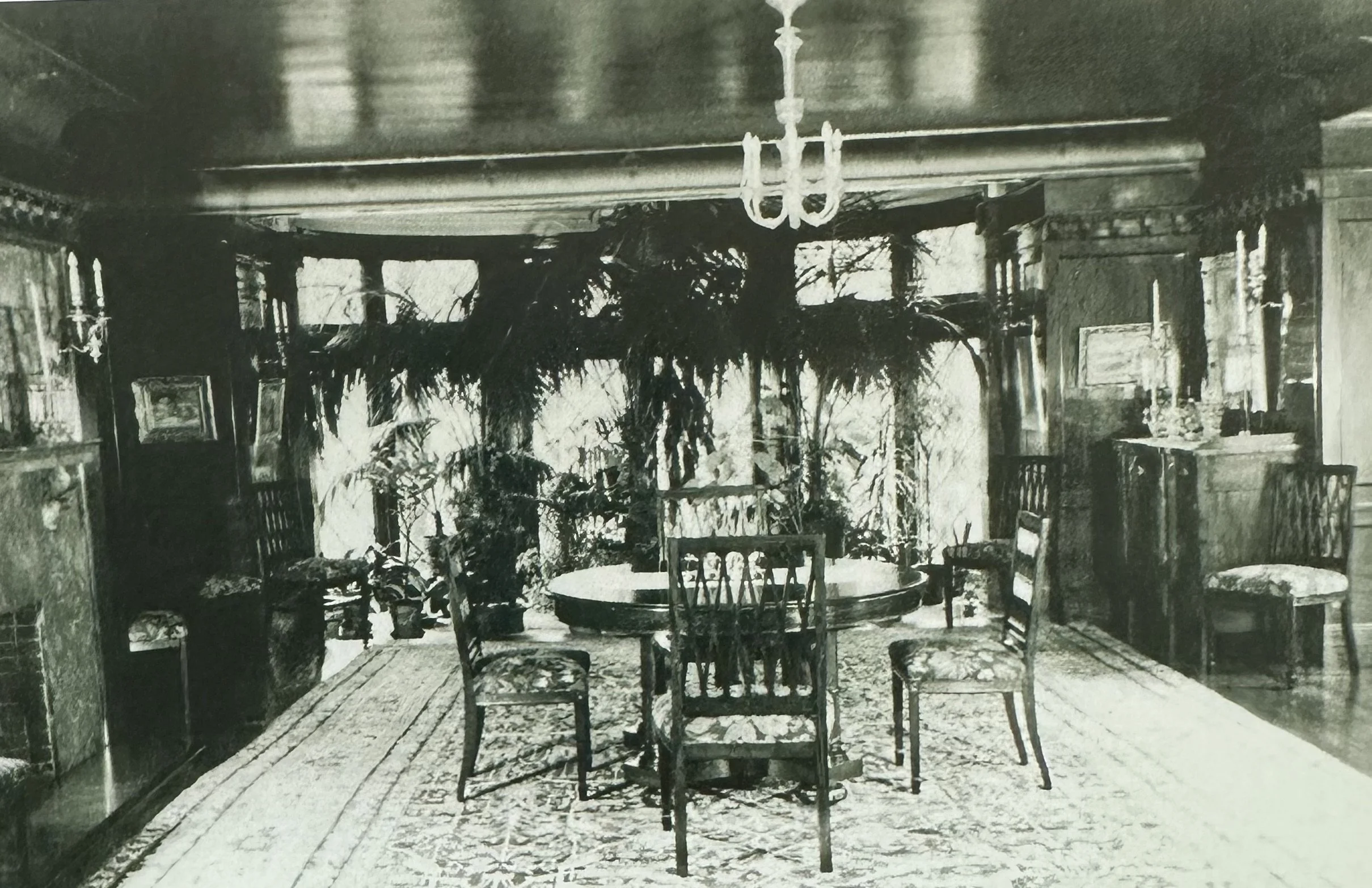
The dining room in Harris Whittemore's house, with the conservatory beyond.
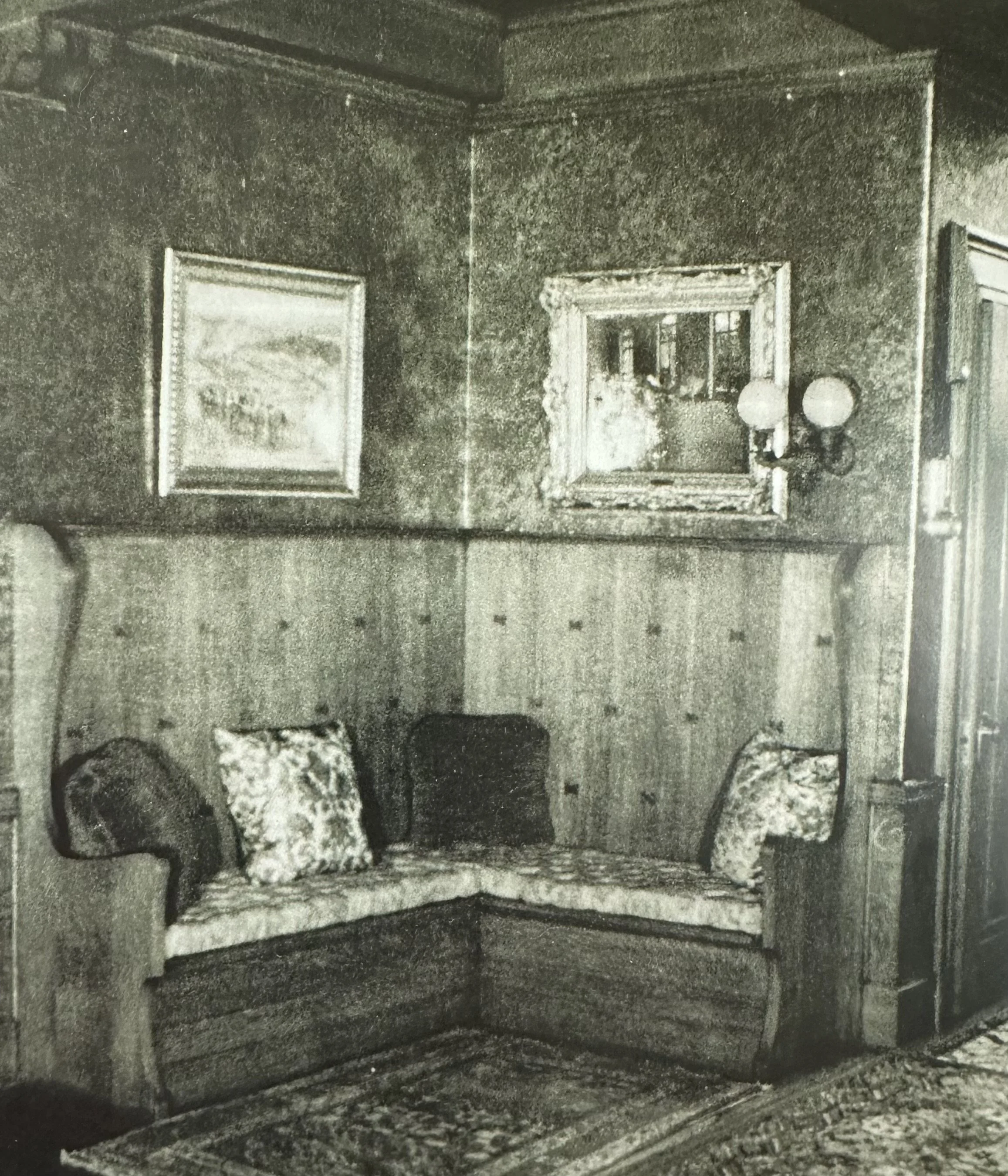
Photo taken in 1941 in the entrance hallway in Harris Whittemore's Naugatuck home, showing works by Degas. At the Start (1913) and The Rehersal (1907)
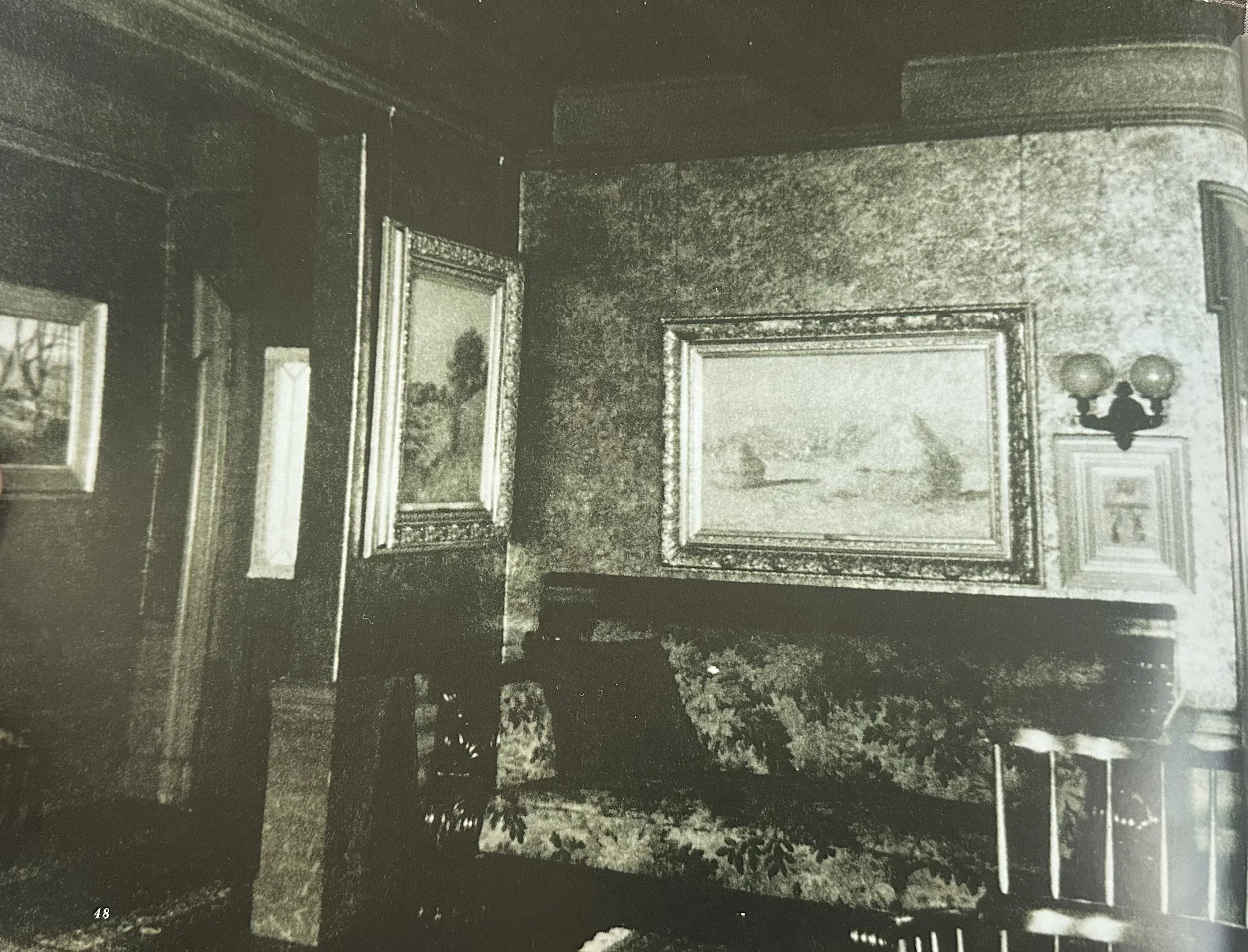
Photo taken in 1941 in the entrance hallway in Harris Whittemore's Naugatuck home, showing Monet. Gust of Wind & The Haystacks in the Sun, Morning Effect.
Liberty Bank and the Legacy of Naugatuck Valley Savings and Loan
In 2015, an important chapter in Naugatuck’s financial history came to a close and a new one began.
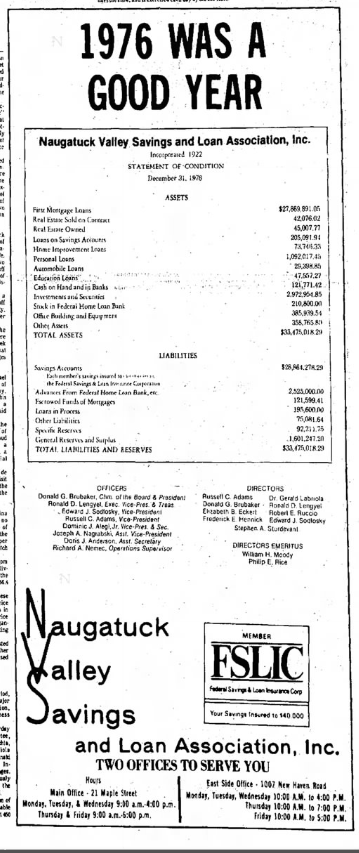
For many residents, Naugatuck Valley Savings and Loan was simply “the local bank.” Headquartered at 333 Church Street, it served generations of families, homeowners, and small business owners throughout the Naugatuck Valley. As a community oriented financial institution, it focused on savings accounts, home mortgages, and local lending.
On June 4, 2015, Liberty Bank and Naugatuck Valley Financial Corporation jointly announced a merger agreement. Naugatuck Valley Financial Corporation was the parent company of Naugatuck Valley Savings and Loan.
Under the agreement:
Liberty Bank would acquire Naugatuck Valley Financial Corporation in a transaction valued at approximately 78 million dollars.
NVSL shareholders would receive 11 dollars per share in cash.
The merger required approval from shareholders and state and federal banking regulators.
The transaction was expected to close in late 2015.
Liberty Bank, founded in 1825 and headquartered in Middletown, is the oldest chartered bank in Connecticut. By the time of the merger, it operated nearly fifty branches across the state and held approximately 4.0 billion dollars in assets.
Following the merger, NVSL branches became part of the Liberty Bank network, expanding Liberty’s presence in New Haven and Fairfield Counties while continuing to serve customers in Naugatuck.
Preserving the Story
Although this event is recent, it represents the end of Naugatuck Valley Savings and Loan as an independent institution and marks an important transition in the town’s economic history.
-
![]()
Naugatuck Daily News - Mon, Jun 16, 1975
-
![]()
Naugatuck Daily News - Mon, Feb 03, 1975
-
![]()
Naugatuck Daily News - Mon, Jan 31, 1977
-
![]()
Naugatuck Daily News - Mon, Nov 03, 1975
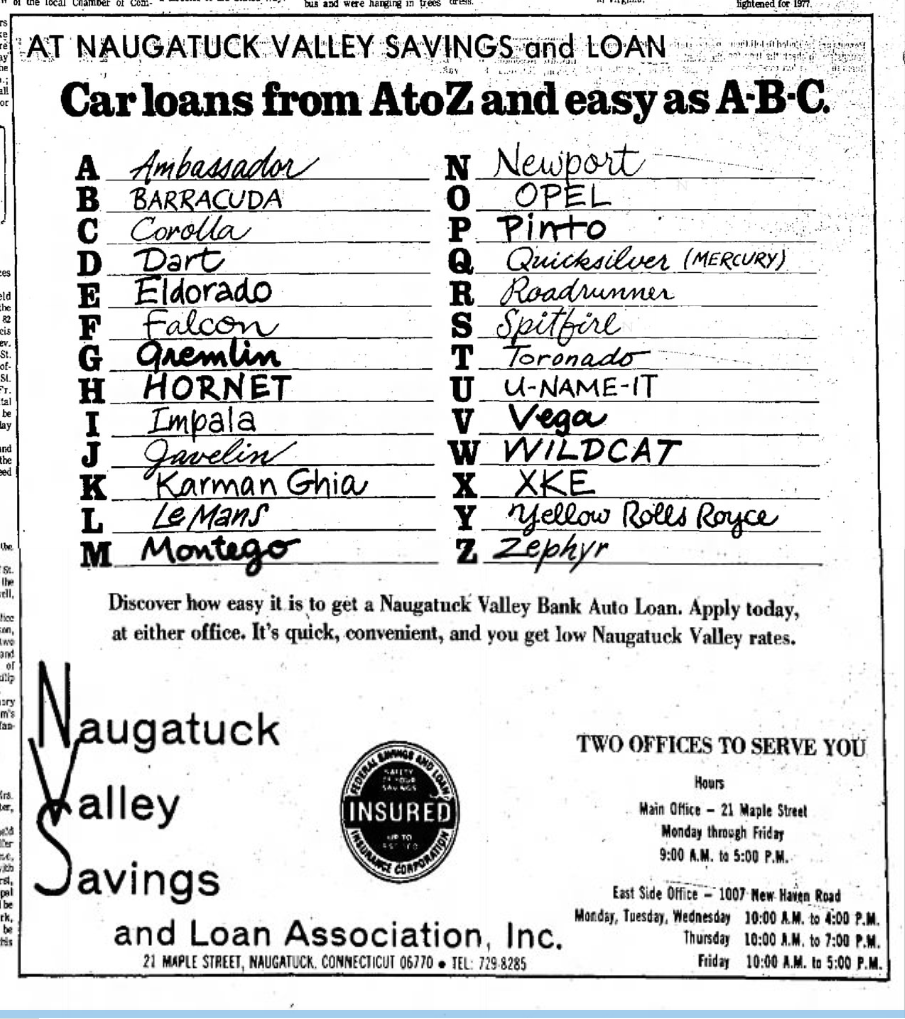


Liberty Bank Online Resource Library
LIBERTY BANK AND NAUGATUCK VALLEY FINANCIAL CORPORATION
ANNOUNCE MERGER AGREEMENT