
People of Naugatuck
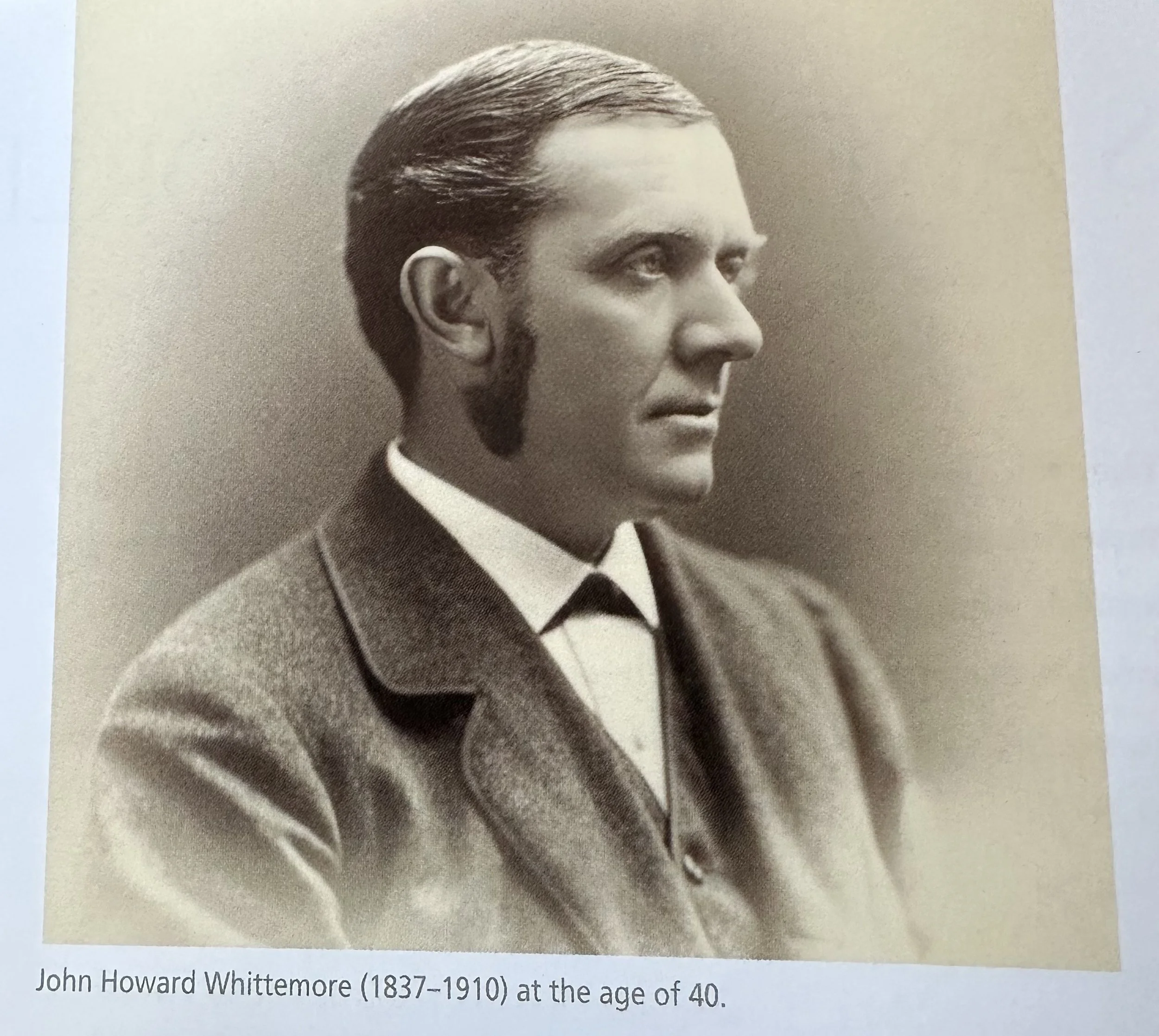
John Howard (J. H.) Whittemore (1837–1910)
Source: Hidden In Plain Sight - The Whittemore Collection and the French Impressionists
Born in Southbury, Connecticut, the son of a Yale-educated Congregational minister, John Howard Whittemore studied at a private school in New Haven but did not enter Yale, as expected. Instead, at the age of eighteen, he moved to New York City to work at Shepard and Morgan, a well-connected merchant commission business whose partners were the soon-to-be son-in-law of the wealthy socialite William Vanderbilt and the son of Edward Morgan, the soon-to-be governor of New York. After the ambitious partnership was dissolved during a business panic in 1857, Whittemore went to work directly for Edward Morgan, then the chairman of the Republican National Committee. By March of 1858, Whittemore was back in Connecticut.
Metalworking Business
That October, the twenty-one-year-old Whittemore joined with twenty-three-year-old Bronson Beecher Tuttle of Naugatuck to take over a metalworking business run by Tuttle’s father, whose shop had recently burned. The young partners began producing a gooseneck hoe, designed by Tuttle, and a variety of iron goods for carriages and harnesses. Their specialty was malleable iron, a practical advance over cast iron because it could be formed into a variety of precise shapes, and a technological advance over wrought iron because of its superior strength. The material was essential to transportation, manufacturing, agricultural, and construction products in the growing nation. Within a decade of establishing the partnership, J. H. Whittemore confided to his wife that in a single year his share of the profits was more than twelve times the value of the bank loan that had gotten the partnership started.
Metalworking Business During Civil War
Alert to new market possibilities, Tuttle and Whittemore made iron caisson hubs for cannon during the Civil War, and scythes and sickles for agricultural work in the expanding Midwest. Following the war, they specialized in steel-laid shears and in plates for bolts that secured the railroad tracks rapidly crossing the nation, and set up a company on Broadway in New York, the Pratt Manufacturing Company, to capitalize on the market for railroad-track supplies. When the boom in rail construction ended late in the nineteenth century, the agile company turned to producing galvanized metal fixtures for glass insulators on telephone poles, and early in the twentieth century to manufacturing iron components for automobiles.
Name Change
Located in the Union City neighborhood of Naugatuck, the business saw its sales and capital grow by nearly 300 percent between 1860 and 1870. More than 350 men worked at the foundry in 1889, when the company name was changed from Tuttle and Whittemore to the Naugatuck Malleable Iron Company.
Additional Sites
Whittemore also invested and took an active role in new malleable-iron foundries starting up in the Midwest, traveling and corresponding extensively to review and consult on operations in the distant mills. The first of these investments was in the Cleveland Malleable Iron Company, founded in Ohio in 1868, which within a few years operated related facilities in Toledo, Indianapolis, and Chicago. Taking charge of the operation in Chicago when its young president died unexpectedly, in 1882, Whittemore was credited with saving the division, which by 1900 employed more than 2,000 workers. The Cleveland company was also affiliated with Leys Malleable Castings in Derby, England, which distributed some of the American products to international markets. By 1912, the company had expanded its operations, acquiring facilities in Sharon, Pennsylvania, and Melrose Park, Illinois, and also purchasing a variety of metalworking firms in the Midwest, including Ewart and Link Belt in Chicago; Emery + Gould in Bay City, Michigan; and Eberhardt Manufacturing Company in Cleveland. The daily operations of the company, which had been renamed the National Malleable Castings Company in 1891, were managed by Alfred A. Pope (1842–1913) as president, with J. H. Whittemore, the investor and advisor, listed as the company’s vice president. Alert to related business opportunities, Whittemore expanded his investments in railroads and real estate in the regions where his iron operations flourished.
Personal Life - Marriage & Children
Meanwhile, in 1863, J. H. Whittemore, known as Howard to friends and family, married Julia Anna Spencer (1839–1915), the daughter of a prominent Naugatuck family of merchants and teachers. Charles Goodyear, the inventor who grew up in Naugatuck, was related to the Spencers through marriage. Throughout her life, Julia struggled with poor health, diagnosed variously as pleurisy, painful neuralgia, and heart trouble. She traveled regularly in search of a cure, or at least relief from her chronic symptoms, undergoing experimental treatments in New Haven, Philadelphia, and Washington, D.C. Beginning in the 1880s, she made extended trips each February and March to warm-weather resorts in Winter Park and Palm Beach, Florida, and also to Aiken, South Carolina; Augusta, Georgia; and Pasadena, California. Winter Park was a favorite and frequent destination. Along with many acquaintances from Connecticut and New York as well as her husband’s associates in the iron business, she stayed at the fashionable Seminole Hotel. She also owned a home in Winter Park, which was later given to the president of Rollins College, a Whittemore protégé.
Three of the Whittemores’ six children survived infancy. Howard (1872–1887), who like his mother suffered from heart trouble, died a few months after his fifteenth birthday. Harris and his younger sister Gertrude (1874–1941) lived to maturity.
The Whittemores shared their Naugatuck household with numerous relations. Julia’s mother and unmarried sister Ellen lived with the couple, as did Gertrude, who remained single and lived at home throughout her life. Until the birth of their second child, Harris and his wife also lived with the senior Whittemores. Visitors were frequent as well, some spending weeks at a time as houseguests. In addition, after the family’s new “mansion” was completed, around 1890, there were seven servants living with the Whittemores, including a coachman whose apartment was in an elaborate carriage house at the back of the property.
Challenging Time in Business + Sixteen Projects
In the 1890s, J. H. served as president of the Naugatuck Malleable Iron Company and continued to work diligently on behalf of the Midwestern operations. This was a challenging time in the iron business, with falling prices, increasing competition, and labor unrest—in Naugatuck as in the rest of the country. As his son began to take a more active role in the company’s management, J. H. remained much involved in the ongoing operation, while also turning his attention to new interests. In the decades that spanned the turn of the century, he sponsored sixteen building projects in Naugatuck, Middlebury, and Waterbury, including schools and other public buildings as well as private residences he built for his family. He donated several of these buildings—a library and two schools—to the town of Naugatuck, with endowments. In addition, he made large financial contributions to the building of a new Congregational church in Naugatuck, a public school in Middlebury, and a private school for girls, also in Middlebury, and commissioned a commercial building in Waterbury that he gave to the hospital there, on the condition that it raise a comparable fund to build a new hospital building.
He also made considerable improvements to local parks, built extensive retaining walls at two cemeteries in Naugatuck, necessary structural improvements that were at the same time highly ornamental, and acquired and had landscaped (complete with a paved drive) a seven-mile scenic parkway that stretched from Naugatuck to Middlebury. Designed in 1896 by Warren Manning, a colleague of the great landscape architect Frederick Law Olmsted, the parkway ran from Whittemore’s home in Naugatuck past the Middlebury green to property he owned on Lake Quassapaug. The route roughly followed present-day Route 63 to Route 188, named Whittemore Road, and continued past the Middlebury green to Whittemore Road on the east side of the lake. Portions of the greenway survive today at the Hop Brook golf course in Naugatuck, at Whittemore Glen State Park, and on the grounds of the Hop Brook Dam.
Acquired More
In 1896, Manning also designed the landscape setting for a new public school, largely paid for by Whittemore, near the Middlebury green and oversaw enhancements to the green itself and several of the adjacent public buildings. Whittemore purchased other property in Naugatuck, paid for the construction of a modest church for Naugatuck’s Swedish Lutheran congregation, developed residential neighborhoods in response to a need for housing as the town’s population doubled, and advised on the location of Naugatuck’s new railroad station to achieve the best orientation to the town’s green, planting 7,500 shrubs along the approach from the station to the green. Farther afield, in 1898, he purchased property along the Connecticut shore at Milford Point, where Julia had spent some summer days, and organized the Laurel Beach Land Company to develop a quiet summer community there.
Like several other wealthy industrialists in the region, including his partner B. B. Tuttle and members of Waterbury’s Chase family, he acquired land in the nearby countryside and created a gentleman’s working farm as well as a summer retreat for his family. In 1892, he began purchasing farms along Lake Quassapaug, in neighboring Middlebury, where he and his brothers had fished when they were growing up in Southbury. By 1910, Whittemore had acquired more than 300 contiguous acres along the lake, forming an estate he named “Tranquillity Farm,” insisting on the English spelling. A substantial dairy operation was established, where the farm staff also raised sheep, pigs, chickens, ducks, and horses and tended to fields planted with wheat, vegetables, and grasses for hay. The grounds on the east side of the lake, landscaped according to designs by Manning to suit a variety of outdoor recreational activities, included a bridle trail for horseback riding, a picnic grove with a large stone fireplace, and a six-hole golf course. Terraced flower gardens, woodlands, meadows, orchards, and scenic outlooks were conceived, planted, and realized. An impressive stone wall, eight years in the making and three and a half miles in length, was built along the property and its main drives, and the vista west across the lake was carefully shaped and planted. Finally, a dam was installed that controlled the lake’s water level.
Public Affairs Involvement + Trolley Lines
Whittemore became active in public affairs, serving not only on numerous corporate boards in the state but also on those of the new civic organizations that were emerging as the region grew. He was a director of the Waterbury Hospital and a founder of the Colonial Trust Company, where he also served as the second president and remained a member of the executive committee until his death. In 1903, when sewage-treatment systems were non-existent in the Naugatuck Valley, he joined with other industrialists to clean up the Naugatuck River through a network of reservoirs, although their plan was defeated by the state legislature on procedural grounds. Whittemore also served on a state commission to establish trade schools in Connecticut, to prepare workers for jobs in the region’s factories, and in 1905 began a term on the board of the New York, New Haven & Hartford Railroad, during years when the rail lines were relocated through town and new train stations were constructed in Naugatuck and Waterbury.
The following year, the Waterbury trolley lines were taken over by a subsidiary of the railroad, giving Whittemore influence over those operations as well. Since the 1890s, trolleys had linked Naugatuck and other towns in the region, including Watertown and Cheshire, to the city of Waterbury, but violent labor problems and the conversion of the lines to electric power caused disruptions in service in the early years of the twentieth century. Furthermore, at a time of national debates about the danger of monopolies, particularly in utilities, the railroad takeover of the trolley lines was controversial.
In 1908, trolley tracks were added to the system to run from Waterbury to Woodbury, passing near the southern end of the Whittemore farmlands and bringing ice as well as dairy and farm products to the urban neighborhoods of the Naugatuck Valley. Also in 1908, the trolley company built an amusement park at Lake Quassapaug, providing recreational activities for city dwellers and making the trolley line more profitable. The local paper credited Whittemore for keeping the trolley bed and the driving roads separate along most of this route, and for eliminating grade crossings, thereby enhancing both passenger safety on the trolley and the pleasure of driving along the roadway. Whittemore was also credited for a structure Manning called the “dainty country trolley station close to the woods,” which still stands along the trolley route at the south end of what was the family farm.
Traveling
Joining many in their social set, J. H. and Julia Whittemore traveled to Europe on regular tours, enjoying the improved ship, train, and hotel accommodations aimed at attracting wealthy Americans. The Whittemores first traveled to Europe in 1881, while their son Harris was studying in Germany, but they made more regular visits in later years, including trips in 1891, 1903, 1906, possibly 1907, and 1908. During the 1903 visit, they ventured out on a strenuous journey to the Mediterranean and Egypt, but their later tours were more comfortable. In 1906 and 1908 the Whittemores took motoring tours in the English countryside, thoroughly enjoying the picturesque estates, the gardens, and the villages, which may have reminded them of the rural village environment they were building in Naugatuck and Middlebury.
Death
J. H. Whittemore’s sudden death, in late May 1910, was widely reported in the press. The Hartford Courant noted that at the time of his death Whittemore was one of the richest men in Connecticut, a conclusion apparently based on his extensive philanthropy. The New York Times claimed that he had given most of his wealth away during his lifetime to public projects in Naugatuck and Waterbury.
Whittemore’s holdings, including his paintings, investments, and real estate in Naugatuck and Middlebury, were given to the J. H. Whittemore Company, formed in 1899, with life use of the real estate and personal property granted to his wife and their daughter Gertrude. In 1924 and 1926, Harris Whittemore also deeded large portions of his own art collection to the company. These transfers helped the family keep the collection and the properties together for future generations and also helped keep the records of these assets private.
Upon news of Whittemore’s death, the citizens of Naugatuck were determined to honor their benefactor. His partner’s widow, Mrs. B. B. Tuttle, suggested that the best tribute would be something Whittemore would have advocated, something beautiful and of practical benefit to the town. A local committee devoted itself to building a bridge in his honor over the Naugatuck River, in effect a new entrance to Naugatuck for automobiles. The bridge was designed by Henry Bacon, one of the family’s favorite architects, who was then overseeing work on the Lincoln Memorial, in Washington, D.C. Townspeople took up a collection to pay for the bridge, but the family, at a cost of $40,000, acquired the land necessary for the bridge abutments and access roads.
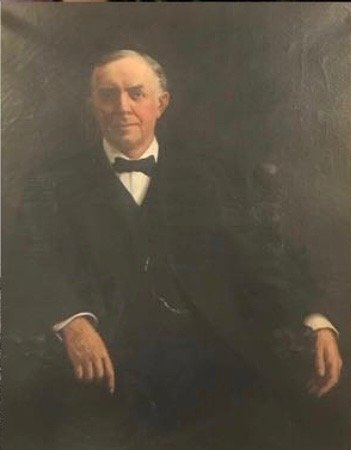
John Howard Whittemore
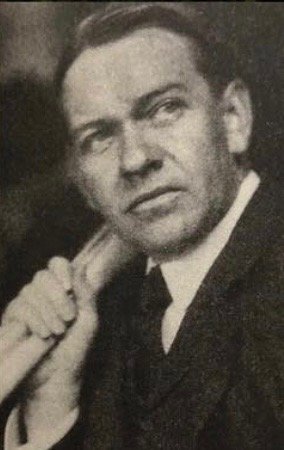
John Howard Whittemore & Harris Whittemore were instrumental in the construction of Westover School.
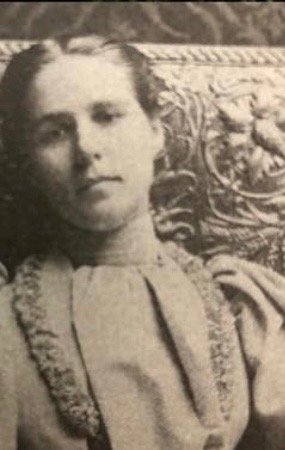
John Howard Whittemore was the first to buy stock in the school and was the first president of the Westover Corporation and the first president of the board of trustees. He would often ask Mary Hilliard “are the girls happy?” Along with his father, Harris helped secure the parcel of land that Westover sits on. Harris also became president of the Westover Corporation (after JHW’s death in 1910).
Community Contribution
An interesting, if not somewhat sad find; being that it's an obituary announcement, but it's for one of Naugatuck's most (if not the most) prominent citizens.
It's still amazing to this very day how much money and time/effort John Whittemore put into improving his adopted town. Naugatuck would not be what it is today if not for his philanthropy.
Under Whittemore’s direction, the famous firm of McKim, Mead and White designed eleven incredible buildings in town, including the library, and the Naugatuck Bank, the first two buildings to define what would become the downtown green. Whittemore’s goal was to provide form and coherence to the town’s growth and also to employ men who were jobless in the face of an 1896 recession.
The firm also designed Salem School, which was the first school in Naugatuck to have modern heat and electricity, and Hillside School, which at the time was the original Naugatuck High School.
Whittemore also donated land to the Congregational Church on the green, as well as several important buildings in Waterbury and Middlebury, notably the Buckingham Building and Whittemore’s own summer home on Lake Quassepaug. He also built several private homes and commissioned a parkway from Naugatuck to Middlebury; that road is now a portion of Route 63.
Of note in this obituary, are the mentions of John's holdings in Chicago and other cities, which I was never really aware of, but demonstrates the great level of wealth and success he achieved.
As one author stated about John and his son Harris: “I think we should all be grateful to the Whittemores for their enlightened example. They took the money they made and used that fortune for the benefit of the communities they lived in.”
---
John Howard Whittemore
Birthdate: October 3, 1837
Birthplace: Southbury, Connecticut
Death: May 28, 1910 (72)
Place of Burial: Naugatuck, Connecticut
Immediate Family:
Son of Reverend Williams Howe Whittemore and Maria Whittemore.
Husband of Julia Anna Spencer Whittemore.
Father of Arthur Harris Whittemore; John Howard Whittemore Jr.; Gertrude Buckingham and Julia Whittemore.
Brother of Williams Clark Whittemore; Edward Payson Whittemore and Emma Parsons Bacon
.
John Howard Whittemore
Harris Whittemore
Mary Hilliard

May 29, 1910

Marble bust of John Howard Whittemore, in the collection of the Naugatuck Historical Society. The black specks are from the fire in the Whittemore mansion, October 1972. The bust was heavily stained with soot and was painstakingly cleaned by NHS volunteers. Source: Ken Hanks